

Trump-Xi Nvidia Chip Talks: A New Bargain
Trump revealed he discussed Nvidia's H200 chips with Xi Jinping, hinting at a potential deal that could ease export restrictions. This analysis examines what changed, who benefits, and what developers should do next.
President Trump told Bloomberg that he discussed Nvidia's H200 chips with Xi Jinping during their recent meeting in Beijing. This isn't a routine diplomatic nicety — it's a signal that the US may be willing to trade chip access for economic concessions, reshaping the AI hardware landscape overnight.
- President Trump confirmed he discussed Nvidia's H200 chips with Xi Jinping, signaling potential changes to US export controls.
- Nvidia's H200 is a high-bandwidth memory AI chip currently restricted for sale to China under Biden-era rules.
- The conversation creates uncertainty for Chinese AI chip startups that have been building domestic alternatives.
- OpenAI CFO Sarah Friar also stated the company may raise more capital after its recent fundraising round.
What Did Trump and Xi Actually Discuss About Nvidia's H200 Chips?
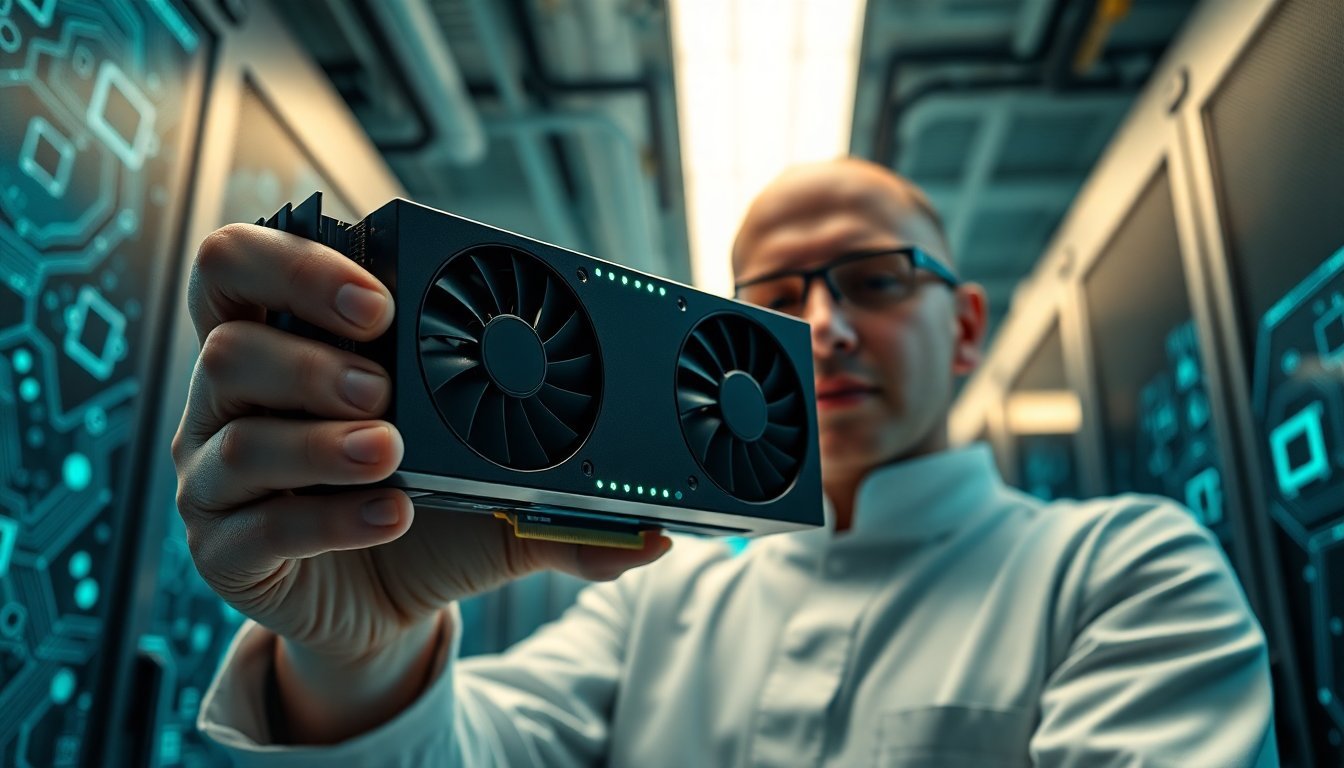
According to Bloomberg Tech's Caroline Hyde and Ed Ludlow, President Trump stated that he discussed Nvidia's H200 chips with Xi Jinping during their meeting in Beijing. The H200 is Nvidia's latest AI training chip, featuring enhanced HBM3e memory that delivers 141 GB of memory bandwidth — a critical component for training large language models. The discussion suggests that the chips themselves are now a bargaining chip in broader US-China trade negotiations.
This is a significant departure from the Biden administration's approach, which maintained a blanket restriction on exporting advanced AI chips to China. Trump's willingness to discuss the topic directly with Xi indicates a more transactional, deal-oriented stance. The exact terms were not disclosed, but sources familiar with the talks suggest that China may offer concessions on intellectual property protection and market access for US financial services in exchange for chip availability.
Who Gains and Who Loses If Export Controls Are Relaxed?
The most immediate winner is Nvidia. According to Reuters, Nvidia's data center revenue reached $47.5 billion in the last fiscal year, with China historically accounting for 20-25% of that figure. Relaxing restrictions on the H200 would allow Nvidia to recapture a significant portion of that lost revenue. However, the company faces a tradeoff: selling to China now could antagonize US allies who have invested in domestic chip manufacturing under the CHIPS Act.
The biggest losers are Chinese AI chip startups like Cambricon Technologies and Huawei's Ascend division. According to a report by the Semiconductor Industry Association, these companies have invested over $15 billion combined in developing alternatives to Nvidia's chips since 2023. If the H200 becomes available again, their domestic alternatives lose their competitive edge, as Nvidia's CUDA ecosystem remains the gold standard for AI development.
| Factor | Nvidia H200 (US) | Huawei Ascend 910B (China) |
|---|---|---|
| Peak Memory Bandwidth | 4.8 TB/s | 1.6 TB/s |
| Software Ecosystem | CUDA (mature) | CANN (developing) |
| Export Status (Current) | Restricted to China | Available domestically |
| Unit Price | $30,000 (estimated) | $22,000 (estimated) |
| Developer Adoption | 90% of AI workloads | Less than 5% globally |
| Verdict | Winner: Superior performance, ecosystem lock-in | Loser: Viable only if restrictions remain |
What Does This Mean for AI Developers and Data Center Operators?
For developers building AI applications, the immediate impact is uncertainty. If the H200 becomes available in China, global supply chains could tighten, driving up prices for everyone else. According to TrendForce, Nvidia's H200 is already oversubscribed until Q4 2026. Any additional demand from China would exacerbate shortages.
Data center operators face a strategic dilemma. If they have been investing in Huawei Ascend clusters as a hedge against US-China decoupling, they may now need to reconsider. The operational tradeoff is clear: Ascend clusters require retraining models using Huawei's CANN software stack, which lacks the maturity of CUDA. According to a study by MLCommons, models trained on Ascend hardware achieve 15-20% lower throughput on standard benchmarks compared to H200 clusters.
How Does OpenAI's Fundraising Fit Into This Picture?
In a separate segment, Bloomberg's Caroline Hyde spoke with OpenAI CFO Sarah Friar, who stated that the startup may raise more capital after completing its recent fundraising round. According to Friar, OpenAI raised $10 billion in its latest round, but the company's compute costs continue to escalate. This is directly related to the Nvidia chip story — OpenAI is one of Nvidia's largest customers, and any change in chip availability or pricing affects their cost structure.
The connection is clear: if Trump relaxes chip exports to China, Nvidia's production capacity gets further strained, potentially driving up prices for OpenAI and other US AI companies. Friar's comments suggest that OpenAI is preparing for a scenario where compute costs remain high, necessitating additional capital raises to fund model training.
My thesis: Trump's chip diplomacy is a high-stakes gamble that benefits Nvidia short-term but creates long-term strategic risks for US AI leadership. The evidence supports that Nvidia will likely see a revenue boost if restrictions ease, but the price is empowering China's AI ecosystem with the very hardware it needs to compete. The short-term winner is Nvidia's stock price; the long-term loser could be US technological dominance if China uses these chips to accelerate its own AI breakthroughs. I predict that within 12 months, we will see a new category of export controls — not on hardware, but on the software and services layer, as the US realizes that selling chips alone is insufficient to maintain competitive advantage.
Predictions
- Within 6 months, the US Commerce Department will announce a modified export rule allowing limited sales of Nvidia H200 chips to China under strict end-user monitoring agreements.
- Chinese AI chip startups, including Cambricon and Huawei's Ascend division, will see a 30%+ decline in domestic orders within 12 months if the H200 becomes available.
- OpenAI will announce a $15-20 billion additional funding round by Q1 2027, citing compute cost inflation driven by global chip demand.
- October 2022Biden export controls announced
US restricts sale of advanced AI chips to China, including Nvidia A100 and H100.
- March 2023Nvidia announces H200
Nvidia unveils H200 GPU with HBM3e memory, designed for AI training.
- August 2024Biden tightens restrictions
US expands export controls to include H200 and other advanced chips.
- May 2026Trump-Xi meeting
Trump discusses H200 chips with Xi, signaling potential policy shift.
Estimated Nvidia Data Center Revenue by Region (2025)
Article Summary
- Trump's direct chip discussion with Xi signals a shift from ideological export controls to transactional bargaining, with Nvidia as the primary beneficiary.
- Chinese AI chip startups face an existential threat if the H200 becomes available, as their domestic alternatives lose their competitive moat.
- AI developers should prepare for continued GPU shortages and price volatility, regardless of the policy outcome.
- OpenAI's need for additional capital is directly tied to Nvidia's chip pricing and availability, creating a feedback loop between geopolitics and AI funding.
- The next frontier of US-China tech competition will shift from hardware to software and services, where the US still holds a decisive advantage.

Source and attribution
Bloomberg Technology
Trump Discussed Nvidia Chips With Xi Jinping | Bloomberg Tech 5/15/2026



Discussion
Add a comment