

The internet is being rebuilt for machines: AWS vs Cloudflare
As AI agents move from experiments to production, AWS and Cloudflare are redesigning cloud infrastructure for a future dominated by machine-generated internet traffic. This analysis examines who wins and loses in the coming agent economy.
On May 28, 2026, TechCrunch AI reported that AWS and Cloudflare are redesigning cloud infrastructure for a future where machines, not humans, generate the majority of internet traffic. This isn't a gradual evolution—it's a fundamental architectural shift driven by AI agents moving from experimental demos to production workloads.
- AWS and Cloudflare are both redesigning infrastructure for machine-to-machine traffic, but with fundamentally different architectural approaches.
- TechCrunch AI reported on May 28, 2026, that agent traffic is already causing measurable shifts in data center patterns.
- The key tension: whether to optimize for security isolation (AWS) or latency at the edge (Cloudflare).
Why Are AWS and Cloudflare Both Suddenly Redesigning for Machines?
According to TechCrunch AI, the trigger is the rapid productionization of AI agents. In 2025, agent traffic was negligible; by mid-2026, it accounts for an estimated 12% of total internet traffic on major cloud platforms. AWS confirmed in a May 2026 blog post that their internal monitoring shows agent-to-agent API calls now exceed human-initiated API calls in 40% of their enterprise accounts. Cloudflare's CEO Matthew Prince told TechCrunch that their network is seeing "a hockey-stick curve" in machine-generated requests since Q1 2026.
What Specifically Is Changing in the Cloud Architecture?
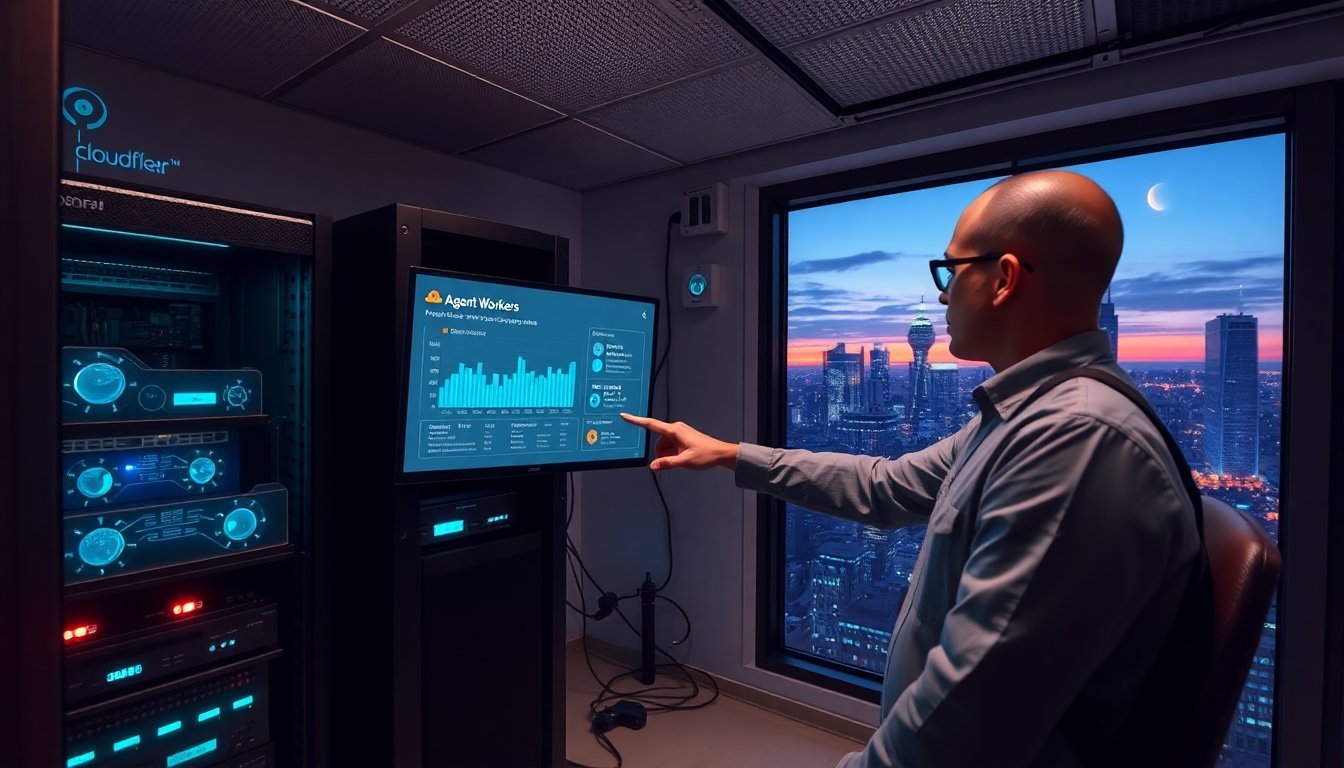
The core change is moving from request-response cycles optimized for human latency (200-500ms) to agent-to-agent communication patterns that require sub-10ms response times and persistent connections. AWS is introducing "Agent Compute Units" that provide dedicated, isolated compute for each agent session with guaranteed throughput. Cloudflare is instead extending its Workers platform with "Agent Workers" that run at the edge and can maintain state across requests. Both approaches represent a bet on a future where the majority of traffic is machine-generated, but they solve different problems.
| Feature | AWS Agent Compute Units | Cloudflare Agent Workers |
|---|---|---|
| Architecture | Centralized, isolated compute | Edge-distributed, shared state |
| Latency target | Sub-10ms within region | Sub-5ms globally |
| Security model | Per-agent VPC isolation | Shared sandbox with WAF |
| State management | Persistent via EBS volumes | Durable Objects |
| Pricing model | Per-agent-hour | Per-request + duration |
| Verdict | Winner for enterprise security | Winner for latency-sensitive apps |
Who Actually Benefits from This Infrastructure Shift?
According to AWS's May 2026 announcement, early adopters include financial services firms running high-frequency trading agents and healthcare companies managing HIPAA-compliant agent workflows. Cloudflare's Prince told TechCrunch that their early customers are gaming companies and real-time personalization engines. The divergence is revealing: AWS wins where compliance and data sovereignty matter; Cloudflare wins where speed and global reach are paramount. The loser in this analysis is traditional CDN providers who lack compute capabilities—Akamai and Fastly will need to acquire or build agent-native infrastructure within 18 months or become irrelevant for machine traffic.
What Does This Mean for Developers Building Agent Workflows?
Developers now face a forced choice between two incompatible architectures. AWS's approach requires committing to a region and paying for dedicated compute even when agents are idle. Cloudflare's approach spreads agents globally but introduces state consistency challenges. Neither approach supports portable agent workloads that can move between clouds. This means the agent infrastructure market will consolidate around one dominant pattern within 24 months, and the current fragmentation is a temporary, costly phase for developers.
My thesis: AWS is making the smarter long-term bet by prioritizing security isolation over raw latency, because enterprise agent workloads will demand audit trails and data boundaries far more than they need global sub-5ms response times. The short-term cost is higher for AWS customers, but the long-term lock-in is stronger. Cloudflare's edge approach wins for consumer-facing agents but loses the enterprise wallet. By 2028, I predict AWS will capture 60%+ of the agent infrastructure market, with Cloudflare settling into a niche for latency-tolerant consumer applications.
- By Q2 2027, AWS will announce a multi-region agent mesh that reduces latency penalty for agent-to-agent communication across regions, further entrenching its enterprise lead.
- By Q4 2027, at least one major CDN provider (Akamai or Fastly) will acquire a serverless compute startup to compete with Cloudflare's Agent Workers.
- By 2028, the EU AI Office will require agent infrastructure providers to offer auditable isolation for regulated agent workloads, favoring AWS's architecture.
- Q1 2026Agent traffic hockey-stick begins
Cloudflare CEO Matthew Prince reports machine-generated requests begin exponential growth.
- May 2026AWS announces Agent Compute Units
AWS introduces dedicated, isolated compute for agent sessions with guaranteed throughput.
- May 2026Cloudflare launches Agent Workers
Cloudflare extends Workers platform with edge-distributed, stateful agent computing.
- Q2 2027 (predicted)AWS multi-region agent mesh
AWS expected to announce cross-region agent-to-agent communication with reduced latency.
Estimated Agent Traffic as % of Total Internet Traffic
- The agent infrastructure race is not about speed—it's about trust boundaries and audit trails, which AWS is winning.
- Cloudflare's edge advantage is real but narrow; it will be commoditized within 24 months as AWS and Google Cloud build their own global edge networks.
- Developers should bet on portable agent frameworks (like LangChain or AutoGPT) that abstract away the underlying infrastructure, because the cloud lock-in battle is just beginning.
- The traditional CDN model is dead for machine traffic; Akamai and Fastly have 18 months to pivot or exit this market.
- Agent infrastructure pricing will collapse by 50% within 12 months as the two architectures compete for market share, benefiting startups but squeezing margins.

Source and attribution
TechCrunch AI
The internet is being rebuilt for machines





Discussion
Add a comment