
Ternus at Apple: Jobs-Era Decisiveness or Risky Gamble?
Apple’s appointment of John Ternus as CEO marks a deliberate return to product-first leadership, but raises questions about whether operational excellence can coexist with Jobs-era risk-taking. Bloomberg reports the decision reflects board frustration with Apple’s slowing product cadence under Cook.
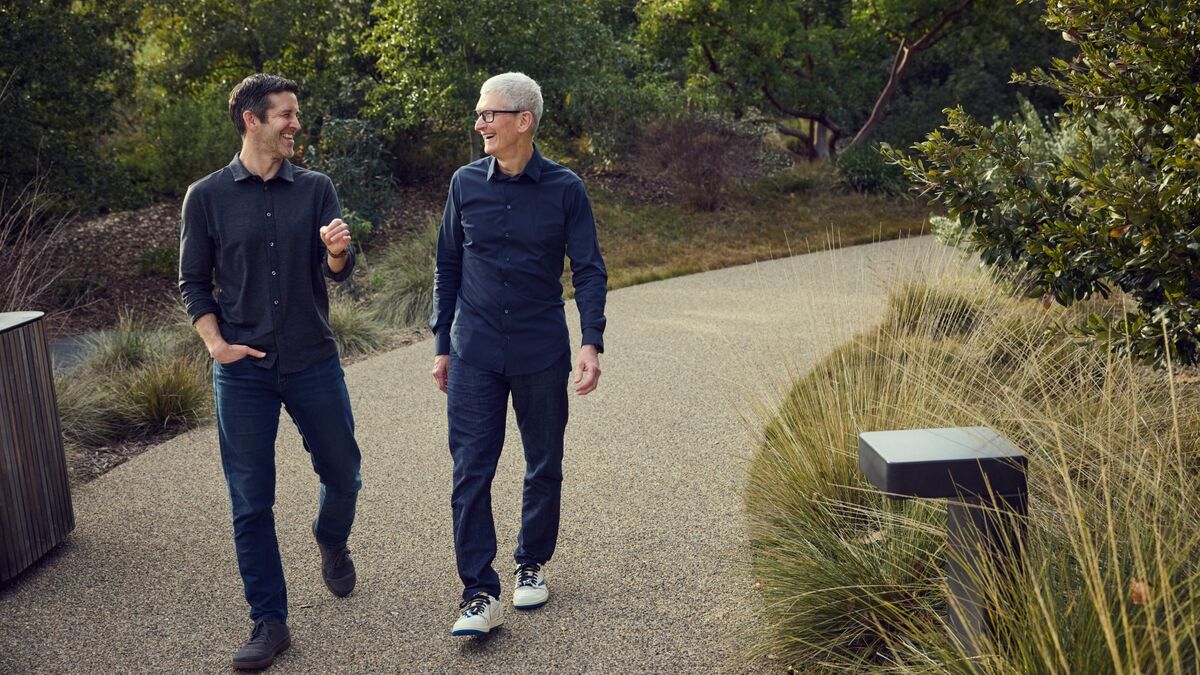
On Monday, Apple Inc. ended months of speculation by announcing that John Ternus, its hardware engineering chief, would replace Tim Cook as CEO. The carefully staged image of Cook and Ternus walking side by side at Apple Park was more than a passing-of-the-torch photo—it was a visual manifesto for a company betting that product decisiveness can restore its innovation mojo.
- Apple announced John Ternus as CEO on April 21, 2026, replacing Tim Cook after 14 years of operational leadership.
- Bloomberg reported the board sought a leader who could make faster product decisions, signaling a return to Jobs-era decisiveness.
- John Ternus brings deep hardware expertise from leading the iPhone and Mac transitions to Apple Silicon, but lacks Cook’s supply chain mastery.
- The move creates uncertainty for investors accustomed to Cook’s predictable margins, while competitors face a potentially more aggressive Apple.
Why Did Apple Choose John Ternus Over Other Internal Candidates?
According to Bloomberg, Apple's board conducted a year-long succession review that narrowed to three internal candidates: Ternus, services chief Eddy Cue, and operations head Jeff Williams. The board ultimately selected Ternus because of his track record with Apple Silicon transitions and his reputation for decisive product calls. Bloomberg reported that Ternus was the driving force behind killing the Apple Car project in early 2024, a decision that saved billions but also revealed his willingness to make unpopular calls. This contrasts with Cook’s consensus-driven approach, which some board members viewed as slowing Apple’s response to competitive threats from Meta in mixed reality and Google in AI.
How Does Ternus’s Background Differ From Cook’s and Jobs’s?
John Ternus joined Apple in 2001 and rose through hardware engineering, leading development of every iPhone from the 12 through the 16 series. Unlike Cook, who built his reputation on supply chain efficiency, or Jobs, who was a product visionary, Ternus is an engineer’s engineer. Reuters reported that Ternus personally oversaw the transition to Apple Silicon, a multi-year effort that required coordinating thousands of engineers across chip design, software, and manufacturing. This technical depth gives him credibility with Apple’s engineering teams but raises questions about his ability to manage Apple’s sprawling services ecosystem, which now generates over $100 billion annually. The comparison table below highlights the key differences:
| Dimension | Steve Jobs (1997-2011) | Tim Cook (2011-2026) | John Ternus (Starting 2026) |
|---|---|---|---|
| Core Strength | Product vision & design taste | Supply chain & operational scale | Hardware engineering & execution |
| Decision Style | Intuitive, often autocratic | Consensus-driven, data-backed | Technically grounded, decisive |
| Key Achievement | iPhone, iPad, App Store | Apple Watch, Services growth, $3T valuation | Apple Silicon transition, Vision Pro hardware |
| Risk Tolerance | Very high | Moderate | High (killed Apple Car) |
| Weakness | Operational chaos | Slow product innovation | Limited services & software experience |
| Verdict | Visionary but unstable | Stable but incremental | Bold but unproven at CEO level |
What Immediate Product Changes Can We Expect Under Ternus?
Bloomberg reported that Ternus has already signaled a faster release cadence for Apple’s mixed reality headset line, with a second-generation Vision Pro expected in early 2027 rather than the previously planned 2028. He is also reportedly pushing for a more aggressive iPhone hardware refresh cycle, moving from a three-year design cycle to two years. However, Reuters noted that Ternus’s first major test will be the iPhone 17 launch in September 2026, which must demonstrate both technical innovation and margin discipline. The risk is that faster product cycles could compress Apple’s famously high gross margins, which Cook maintained above 40% for nearly a decade.
My thesis is straightforward: Apple’s board made a calculated bet that product decisiveness matters more than operational continuity in an era of AI and mixed reality disruption. But I believe this bet is riskier than the market currently prices in. In the short term, Ternus will benefit from a honeymoon period where investors credit him for bold product moves. The Vision Pro 2 acceleration could create genuine excitement in a category that has been slow to adopt. However, the long-term risk is that Ternus lacks Jobs’s instinct for what consumers actually want versus what engineers find impressive. The Apple Car cancellation was a good call, but it was also an easy one—the car had no clear product vision. The harder decisions will come when Ternus must choose between engineering ambition and market reality, particularly on pricing. The biggest winner here is Meta, which now faces a more aggressive Apple in mixed reality but also has a clearer target to compete against. The biggest loser is Google, which must now contend with an Apple that may move faster on AI integration into hardware. My concrete prediction: by Q3 2027, Apple will announce a mid-range Vision headset priced under $2,000, directly competing with Meta’s Quest line, and this will mark Ternus’s first major strategic test.
Predictions:
- Apple will announce a mid-range Vision headset under $2,000 by Q3 2027, directly challenging Meta’s Quest line and testing Ternus’s ability to balance engineering ambition with market pricing.
- Apple’s gross margin will drop below 38% for the first time since 2017 by fiscal 2028, as faster product cycles and aggressive pricing compress profitability under Ternus’s tenure.
- The EU will launch a formal antitrust investigation into Apple’s mixed reality ecosystem by early 2027, citing potential bundling advantages similar to the App Store case.
- April 2026Apple announces John Ternus as CEO
Bloomberg reports the board selected Ternus for his product decisiveness, replacing Tim Cook after 14 years.
- Early 2024Ternus leads Apple Car cancellation
Ternus was the key executive who killed the $10 billion Apple Car project, demonstrating his willingness to make unpopular decisions.
- 2020-2023Apple Silicon transition under Ternus
Ternus oversaw the multi-year transition from Intel to Apple Silicon across Mac products, a technical and logistical achievement.
- September 2026First major test: iPhone 17 launch
Ternus’s first product launch as CEO must balance innovation with margin discipline.
Article Summary:
- Apple’s CEO succession from Cook to Ternus is not a continuity play but a deliberate strategic pivot toward product-led decisiveness.
- Ternus’s hardware engineering background gives him credibility with product teams but raises concerns about his ability to manage Apple’s services business.
- The accelerated Vision Pro 2 timeline signals that Apple sees mixed reality as the next major platform battleground, not a niche experiment.
- Investors should watch Apple’s gross margins closely; faster product cycles historically compress profitability in hardware businesses.
- Meta and Google face a more unpredictable Apple that may make bolder competitive moves, particularly in AI-hardware integration.
Source and attribution
Bloomberg Technology
Apple Bets New CEO John Ternus Will Bring Back Jobs-Era Decisiveness




Discussion
Add a comment