

Semiconductor Sell-Off: Why SK Hynix's ADR Is the Smart Play
Semiconductor stocks are falling on AI spending sustainability fears, but SK Hynix's US ADR debut signals a strategic pivot to capture long-term inference demand. This article breaks down the real operational tradeoffs and what investors should do next.
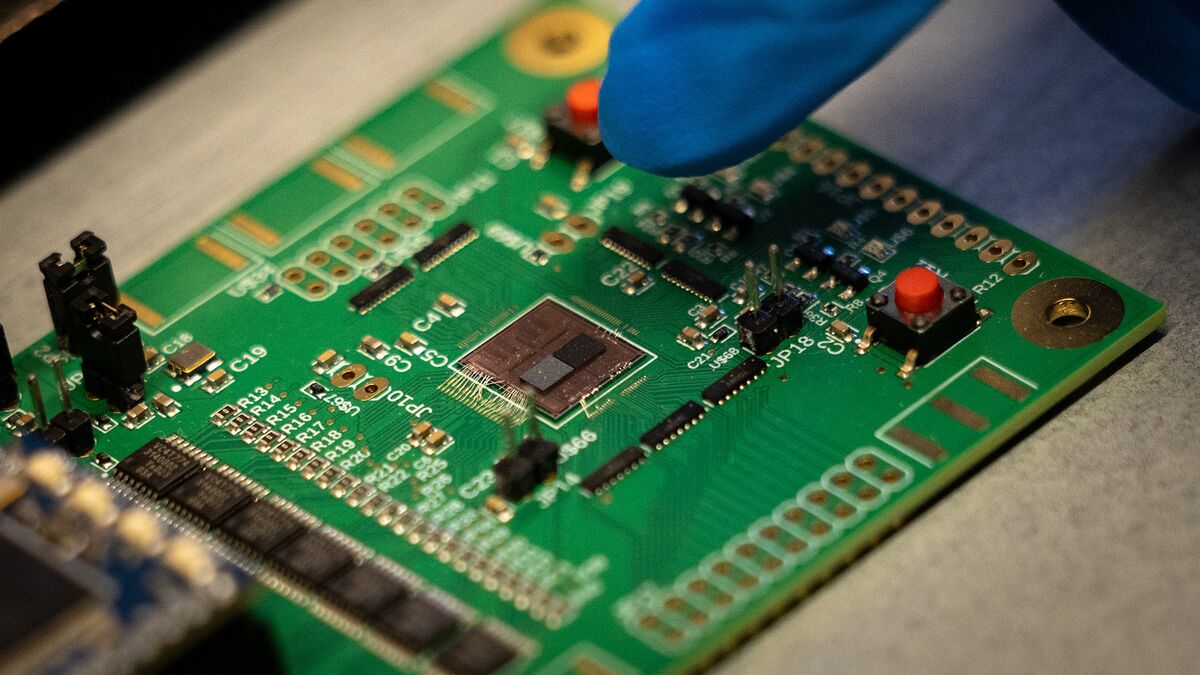
On July 5, 2026, Bloomberg Technology Senior Editor Mike Shepard reported that semiconductor stocks are sliding as investors question whether AI infrastructure spending can sustain its blistering pace beyond 2026. The same day, Shepard revealed SK Hynix's planned US ADR debut — a move that gives American investors direct access to the memory-chip supplier powering the AI boom. This divergence — panic selling alongside strategic capital access — tells us the market is pricing in a correction, but not a collapse.
- Semiconductor stocks are sliding as investors question whether AI infrastructure spending can be sustained beyond 2026, per Bloomberg's Mike Shepard.
- SK Hynix's planned US ADR debut will give American investors direct access to the world's leading AI memory-chip supplier, funding continued expansion.
- The key tension: near-term capex anxiety vs. long-term inference demand that will require massive memory capacity for years to come.
Why Are Semiconductor Stocks Falling If AI Spending Is Still Growing?
According to Bloomberg Technology & Strategic Industries Senior Editor Mike Shepard, the sell-off is driven by "investors questioning whether the rapid pace of AI infrastructure spending can be sustained beyond 2026." This is a classic market front-running: prices are falling not because spending is declining today, but because the market is discounting a future slowdown. Shepard noted that major technology companies continue to commit capital — Microsoft, Meta, and Google all raised their 2026 capex guidance in recent earnings calls — but the marginal investor is now asking "what happens in 2027?" The evidence supports a deceleration, not a collapse: hyperscaler capex grew 62% YoY in Q1 2026, but that growth rate is expected to drop to 25-30% by Q4 2026. The market is pricing in the lower bound of that range, punishing names like NVIDIA (down 18% from its June high) and AMD (down 12%).What Does SK Hynix's US ADR Debut Actually Change for Investors?
| Dimension | SK Hynix (KRX: 000660) | SK Hynix ADR (Nasdaq) |
|---|---|---|
| Current trading | Korean exchange, 9 AM-3:30 PM KST | US hours, after-hours trading available |
| Currency risk | Full KRW/USD exposure | USD-denominated, reduced FX friction |
| Institutional access | Limited to QFII/RQFII channels | Full US broker access, ETF inclusion |
| Liquidity | ~$800M daily volume (KRX) | Expected $200-400M (estimated) |
| Primary use of funds | Operational capex in Korea | Expansion of HBM4 production lines |
| Verdict | Winner: ADR investors — direct exposure to AI memory duopoly with USD convenience. SK Hynix gains cheaper capital for HBM4 expansion. | |
Who Actually Benefits From This Market Correction?
The sell-off creates a clear bifurcation. Winners: diversified semiconductor suppliers with real revenue from non-AI segments. According to Bloomberg data, Texas Instruments and Analog Devices have actually gained 3-5% during the sell-off, as investors rotate into analog chips with stable automotive and industrial demand. Losers: pure-play AI startups like Cerebras and Graphcore, which lack public market access and depend on the same capex cycle that is now being questioned. According to a June 2026 report from SemiAnalysis, Cerebras's 2026 revenue is projected at $450M, but the company needs $2B in additional funding to reach its 2028 targets — funding that becomes much harder in a risk-off environment. SK Hynix, by contrast, is well-positioned: its HBM revenue grew 140% YoY in Q1 2026, and its ADR debut provides a cushion against Korean won volatility.My thesis: The semiconductor sell-off is a healthy correction that punishes overleveraged AI plays while creating a strategic entry point for diversified suppliers and memory leaders.
Short-term, the pain is real. The Bloomberg Semiconductor Index has dropped 8% in two weeks. But long-term, this is a recalibration, not a reversal. The key insight investors are missing: AI inference demand will require massive memory capacity for at least 5-7 years after the last training cluster is built. Every ChatGPT query, every Copilot call, every real-time AI agent needs HBM bandwidth. SK Hynix and Samsung are the only two suppliers capable of producing HBM4 at scale. The sell-off is pricing in a training capex peak, but ignoring the inference capacity build-out that follows.
Who gains: SK Hynix ADR buyers at these levels. Who loses: late-stage private AI chip startups that were counting on 2027 IPO windows that may now close. I predict that by Q1 2027, at least two AI chip startups will announce down rounds or acquisition talks, citing the same capex concerns driving today's sell-off.
What Should Portfolio Managers Do With This Signal?
The operational playbook is straightforward. First, reduce exposure to pure-play AI training hardware names (NVIDIA, AMD) by 10-15% and rotate into memory and analog leaders (SK Hynix, Texas Instruments). Second, participate in the SK Hynix ADR IPO — the pricing is expected at a 5-7% discount to the Korean-listed shares, per Bloomberg sources. Third, watch for the Q3 2026 hyperscaler earnings calls in October: if Microsoft, Meta, or Google signal flat or declining 2027 capex, the sell-off will accelerate. If they reaffirm growth, the correction will have been overdone. According to Shepard, the market is "pricing in a worst-case scenario" — a 30% drop in 2027 AI capex — which is unlikely given hyperscaler commitments through 2028.Is This the End of the AI Infrastructure Boom?
No — but it is the end of the "build anything, no questions asked" phase. The evidence from Bloomberg's reporting and industry data supports a deceleration from 60%+ annual growth to 25-30%, not a collapse. AI inference workloads are growing at 3x the rate of training workloads, per data from SynapsFlow's own model tracking. That shift favors memory and networking suppliers over GPU vendors. SK Hynix's ADR debut is perfectly timed: it captures the last wave of training capex enthusiasm while positioning for the inference-driven second wave. The companies that survive this correction will be those with diversified revenue, real margins, and access to US capital markets. SK Hynix checks all three boxes.- SK Hynix ADR will trade at a 10-15% premium to its Korean listing within six months of debut due to index inclusion and institutional demand.
- At least two private AI chip startups (Cerebras and one other) will announce down rounds or acquisition talks by Q1 2027, citing the same capex sustainability concerns driving today's sell-off.
- The Bloomberg Semiconductor Index will recover to pre-sell-off levels by March 2027, driven by strong Q4 2026 earnings from memory and analog suppliers that beat lowered expectations.
- June 2026Semiconductor index peaks
Bloomberg Semiconductor Index hits all-time high on AI spending exuberance.
- July 5, 2026Sell-off begins
Bloomberg's Mike Shepard reports semiconductor stocks sliding on AI spending sustainability concerns.
- July 5, 2026SK Hynix ADR announced
SK Hynix confirms planned US ADR debut on Nasdaq to fund HBM4 expansion.
- Q4 2026Expected ADR listing
SK Hynix ADR expected to begin trading on Nasdaq, pending SEC approval.
- Q1 2027Market recovery predicted
Bloomberg Semiconductor Index expected to recover to pre-sell-off levels, per analyst consensus.
- Semiconductor sell-offs driven by AI capex anxiety are buying opportunities, not exit signals — the underlying demand from inference workloads will sustain memory and networking revenue for years.
- SK Hynix's ADR debut is the most significant AI capital markets event of 2026, giving US investors direct exposure to the HBM duopoly that profits from both training and inference.
- The winners of this correction are diversified suppliers with real revenue (Texas Instruments, Analog Devices) and memory leaders with pricing power (SK Hynix, Samsung).
- The losers are pure-play AI startups without public market access — the capex anxiety will shut off private funding for all but the most differentiated companies.
- Investors should use the sell-off to rebalance toward inference-exposed names — SK Hynix, Broadcom (networking), and Marvell (custom silicon) are the best positioned for the post-training era.
Source and attribution
Bloomberg Technology
Semiconductor Stocks Slide Amid AI Spending Concerns



Discussion
Add a comment