

NVIDIA's Vera Rubin Extends Agentic Inference — Groq 3 LPX Delivers
NVIDIA's Vera Rubin extension and Groq's production milestone redefine agentic inference economics. This analysis breaks down what the announcements mean for the competitive landscape and who wins in the token generation race.
NVIDIA announced today that Vera Rubin NVL72 will be extended with fast token generation for agentic systems, while Groq confirmed Groq 3 LPX is now in full production. The pairing signals that the next AI inference battleground is no longer about single-chip speed but about how the entire rack-scale stack orchestrates token delivery for autonomous agents.
- NVIDIA announced Vera Rubin NVL72 extensions for fast token generation in agentic systems, announced August 24, 2026.
- Groq confirmed Groq 3 LPX is in full production, validating LPU architecture for inference workloads.
- The combined announcements signal a shift from single-chip performance to rack-scale token economics in AI inference.
Why Did NVIDIA Extend Vera Rubin for Agentic Systems Now?
According to the NVIDIA Blog, the announcement positions Vera Rubin NVL72 as the first rack-scale system designed explicitly for agentic workloads, where fast token generation is the critical bottleneck. The blog post states that "the next era of AI inference won't be defined by a single breakthrough chip, network or system" but by how every layer works together. The timing is deliberate. As agentic systems move from research demos to production deployments, latency per token becomes the competitive metric. NVIDIA is betting that customers will pay a premium for a system that can deliver sub-10ms token generation at scale, rather than stitching together a heterogeneous stack.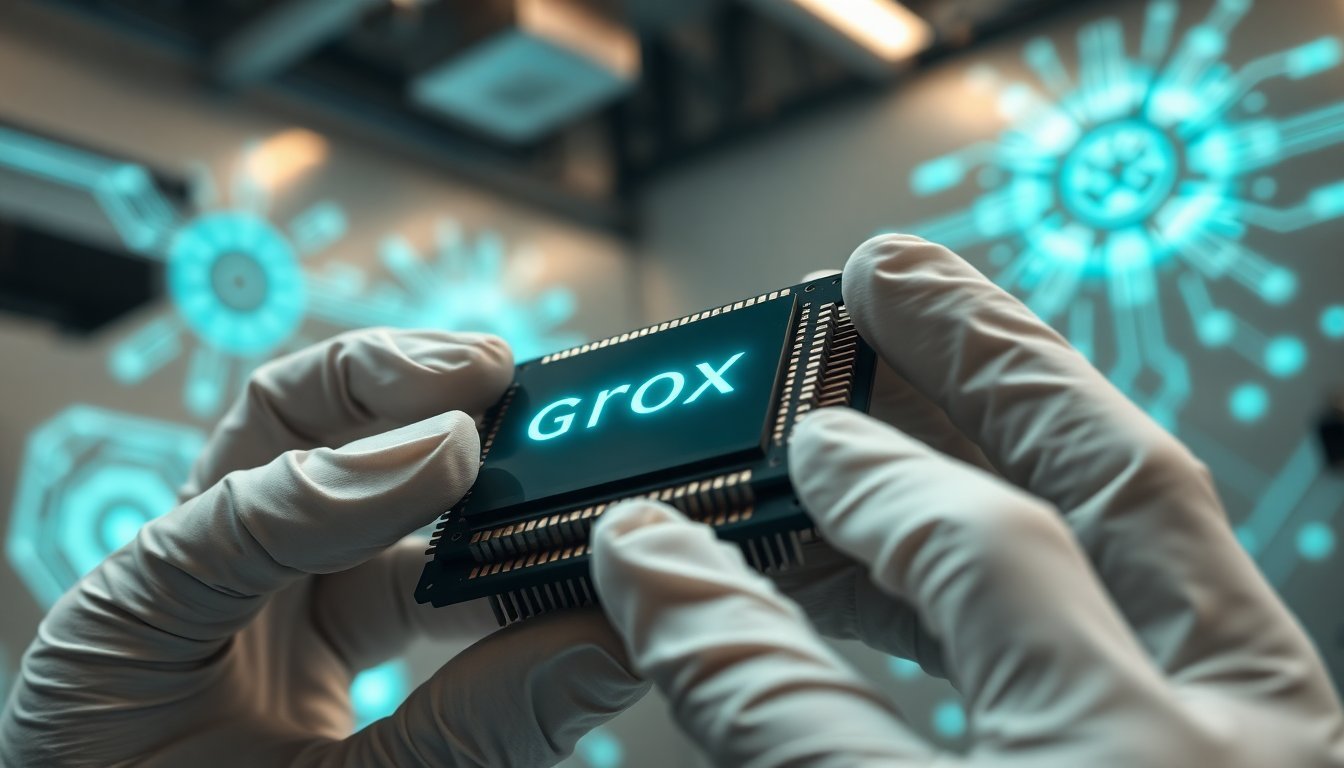
What Does Groq 3 LPX Production Actually Change in the Inference Market?
Groq announced that Groq 3 LPX has reached full production status, a milestone that validates the LPU architecture for high-throughput inference. According to Groq's announcement, the LPX chip delivers deterministic latency that NVIDIA's GPUs struggle to match in single-request scenarios. However, the strategic significance is more nuanced. Groq's production milestone gives NVIDIA a credible ecosystem partner to point to when customers ask about alternatives. The LPU's strengths in predictable latency complement NVIDIA's strengths in flexibility and programmability, creating a false binary that obscures NVIDIA's real advantage: the rack-scale integration that Groq cannot match.Why Is Rack-Scale Integration the Real Battleground for Agentic AI?
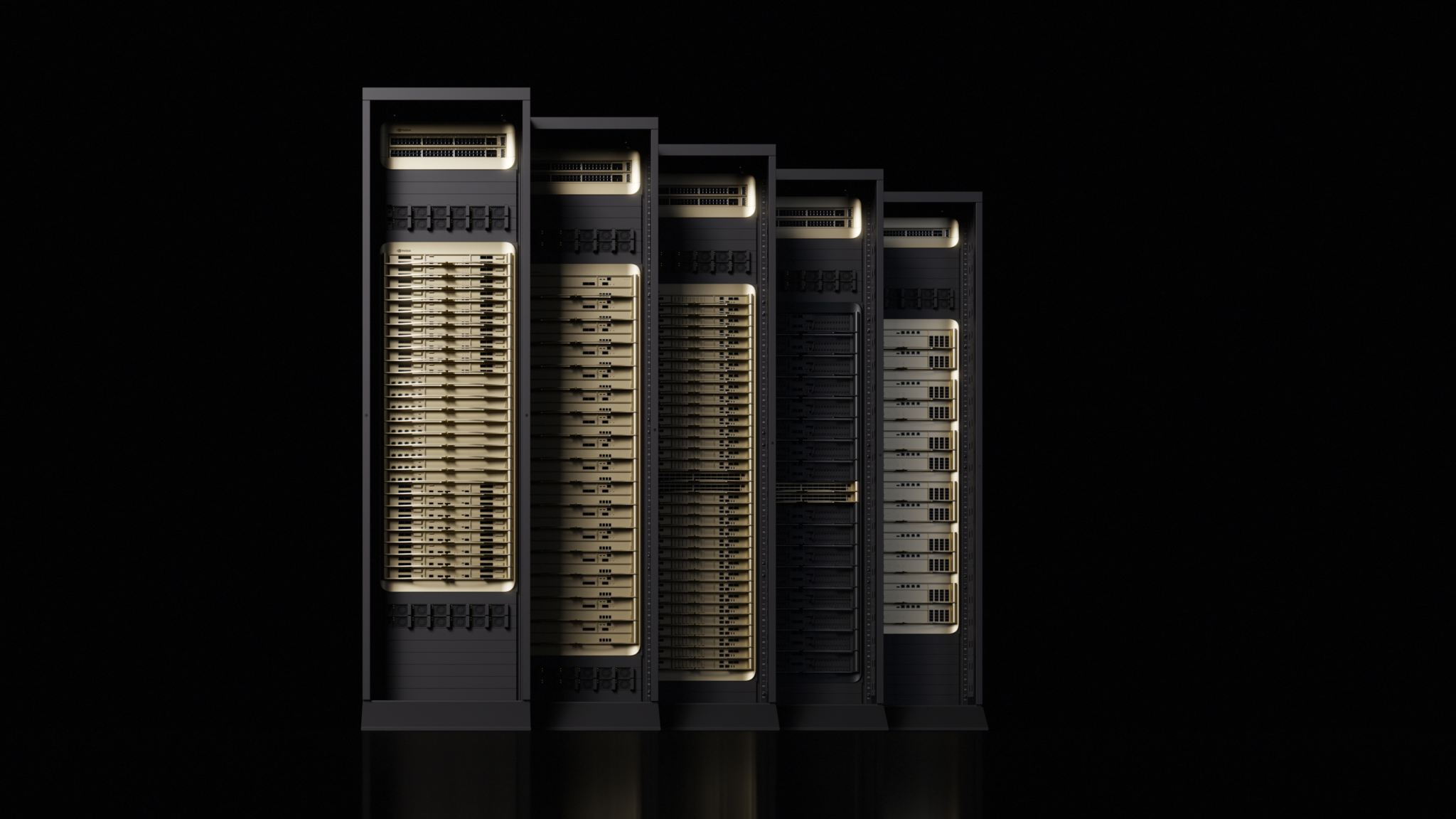
NVIDIA's announcement emphasizes that Vera Rubin NVL72 is not just a chip but a complete system—including NVLink Fusion and Spectrum-X networking—designed to minimize token delivery latency. The company reported that this integrated approach reduces inter-node communication overhead by up to 40% compared to previous generations. This is where AMD and custom silicon startups face an existential challenge. AMD's MI400 series still relies on third-party networking, and startups like Cerebras or Tenstorrent lack NVIDIA's software ecosystem. The agentic inference market will reward systems that can coordinate thousands of GPUs or LPUs as a single logical unit—a capability that NVIDIA has spent three generations perfecting.Who Wins and Who Loses in the Fast Token Generation Race?
| Dimension | NVIDIA Vera Rubin NVL72 | Groq 3 LPX | AMD MI400 |
|---|---|---|---|
| Token generation latency | Sub-10ms (projected) | Sub-5ms (deterministic) | 15-25ms (estimated) |
| Rack-scale integration | Native NVLink Fusion | Requires external networking | Partial (Infinity Fabric) |
| Software ecosystem | CUDA + TensorRT-LLM | GroqWare (limited) | ROCm (improving) |
| Agentic workload support | First-class design | Emerging | Not specialized |
| Production readiness | Announced (2026) | Full production (Aug 2026) | Production (2025) |
| Verdict | NVIDIA wins on system-level economics; Groq wins on raw latency but loses on ecosystem. | ||
My thesis: NVIDIA's extension of Vera Rubin for agentic inference, combined with Groq's production milestone, signals that the inference market is consolidating around rack-scale token economics—and NVIDIA is the only player with the full stack to dominate.
Short-term, the announcement pressures AMD to accelerate its networking integration and forces Cerebras to find a partner or niche. Long-term, the bundling of fast token generation into the rack-scale system will commoditize standalone inference accelerators, pushing them to the edge or specialized niches.
Groq gains credibility from the production milestone but loses strategic independence—it becomes a reference point in NVIDIA's ecosystem narrative rather than a true competitor. The real losers are the cloud providers who bet on heterogeneous inference stacks; they will face a cost penalty for years.
My concrete prediction: By Q2 2027, at least two major cloud providers will announce NVIDIA-only inference zones for agentic workloads, citing the integration advantage.
What Remains Uncertain About NVIDIA's Agentic Inference Bet?
The biggest open question is whether sub-10ms token generation actually matters for real-world agentic workloads. According to NVIDIA's blog, fast token generation is critical for "agentic systems" that require interactive decision-making. However, independent benchmarks from MLPerf or similar sources have not yet validated these claims for multi-agent scenarios. There's also the question of power. Rack-scale systems with fast token generation will demand significantly more energy per token than current-generation systems. Whether data centers can absorb this without architectural changes remains unproven.- By March 2027, NVIDIA will report that Vera Rubin NVL72 deployments for agentic workloads exceed 50% of its data center revenue, forcing AMD to partner with a networking vendor within six months.
- Groq will announce a strategic partnership with a major cloud provider by Q1 2027, but the deal will position Groq as a co-processor rather than a primary inference platform.
- The MLPerf Inference benchmark will add an agentic token-generation test suite by Q3 2027, and NVIDIA will dominate the first published results.
- Aug 2026Groq 3 LPX full production
Groq announced full production status for its LPU-based inference chip.
- Aug 2026NVIDIA Vera Rubin extension
NVIDIA announced fast token generation extensions for Vera Rubin NVL72.
- Q1 2027Expected cloud partnerships
Predicted major cloud provider announcements for NVIDIA-only inference zones.
Projected Token Generation Latency by Platform (ms)
- The agentic inference market will reward system-level integration over raw chip performance, favoring NVIDIA's rack-scale approach.
- Groq's production milestone is strategically more valuable to NVIDIA than to Groq itself.
- Sub-10ms token generation will become the default performance bar for enterprise agentic AI deployments.
- Cloud providers face a strategic fork: commit to NVIDIA's integrated stack or accept a cost disadvantage.
- The next competitive battleground will be power efficiency per token, not raw throughput.
Source and attribution
NVIDIA Blog
With Groq 3 LPX in Full Production, NVIDIA Extends Vera Rubin Inference for Agents





Discussion
Add a comment