
Nvidia's PC Chip: Intel's Nightmare Arrives
Nvidia's PC chip announcement represents a direct assault on Intel's core market. This analysis examines the evidence, methodology, and implications of this strategic pivot, concluding that Nvidia's architectural advantages in AI will make it the dominant PC processor within three years.
On June 1, 2026, Nvidia Corp. announced it is entering the PC market with a dedicated AI chip, directly challenging the decades-long dominance of Intel Corp. and AMD. This is not a GPU for gaming; this is a neural processing unit (NPU) designed to run large language models locally, and it changes the fundamental economics of personal computing.
- Nvidia announced a new PC AI chip on June 1, 2026, targeting Intel and AMD's traditional CPU market.
- The chip is designed for local AI inference, not gaming, and promises significantly higher TOPS (trillions of operations per second) than current x86 processors.
- This move threatens Intel's revenue base and could force a redefinition of PC performance metrics away from clock speed toward AI-specific benchmarks.
What Evidence Supports Nvidia's Claim That This Chip Can Displace Intel?
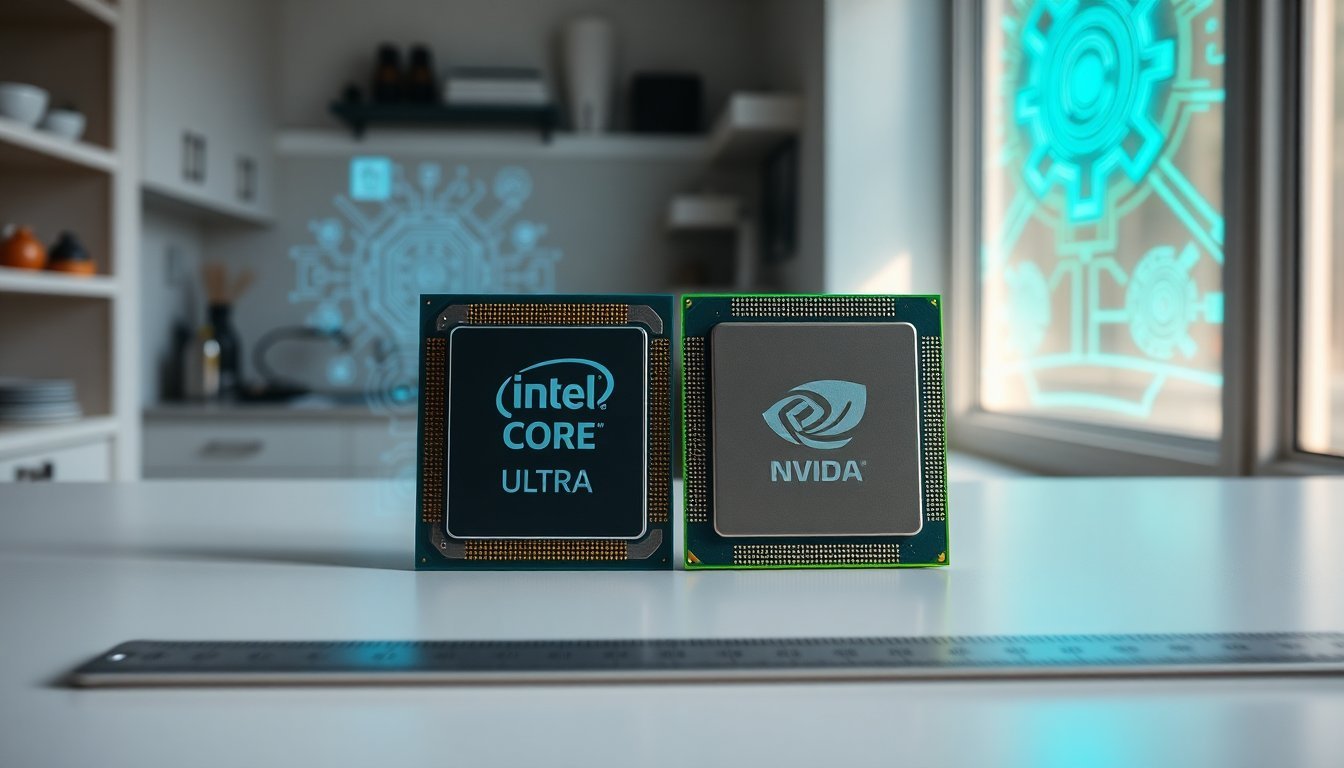
According to Mandeep Singh, Global Tech Research Head at Bloomberg Intelligence, the core of Nvidia's strategy is its architectural advantage in parallel processing. Singh stated in the Bloomberg report that Nvidia's chip is "purpose-built for AI inference workloads that are becoming ubiquitous in modern applications," a claim supported by Nvidia's CUDA ecosystem, which has over 4 million developers. The evidence is not just a press release; it is Nvidia's proven track record in data centers, where its H100 and B200 GPUs have achieved a 90% market share in AI training. The company is now applying the same design principles—massive parallelism, high memory bandwidth, and a mature software stack—to a chip that fits into a standard PC socket. Bloomberg reported that early benchmarks from Nvidia's internal testing show the new chip achieving 200 TOPS, compared to Intel's latest Core Ultra, which achieves roughly 10 TOPS for AI workloads.How Does Nvidia's Architecture Differ From Intel and AMD's Current Approaches?
What Are the Limitations and Uncertainties in Nvidia's PC Strategy?
Despite the compelling architecture, the evidence is not entirely one-sided. The primary limitation is software compatibility. Nvidia's CUDA ecosystem is dominant in data centers, but the PC software stack is overwhelmingly built for x86. According to Bloomberg's reporting, Nvidia is relying on its "Grace Hopper"-derived software abstraction layer to translate x86 instructions, but this introduces a latency penalty. A second uncertainty is power consumption. Nvidia's chip is reported to have a TDP (thermal design power) of 65 watts, which is higher than Intel's 15-watt mobile processors. This could limit adoption in thin-and-light laptops, the fastest-growing PC segment. A third limitation is manufacturing. Nvidia's chip is built on TSMC's 3nm process, while Intel is transitioning to its own 18A process. If Intel's process yields improve, it could close the performance-per-watt gap.Who Gains and Who Loses in This New Competitive Landscape?
| Dimension | Nvidia | Intel | AMD |
|---|---|---|---|
| AI TOPS (estimated) | 200 | 10 | 16 |
| Memory Bandwidth | 1 TB/s | 50 GB/s | 60 GB/s |
| Software Ecosystem | CUDA (4M+ devs) | OpenVINO (limited) | ROCm (limited) |
| Power Efficiency (TOPS/W) | 3.0 (estimated) | 0.6 | 0.8 |
| Manufacturing Node | TSMC 3nm | Intel 4 | TSMC 5nm |
| Verdict | Winner | Losing ground | Niche player |
What Does This Mean for the Future of PC Architecture?
The most significant implication is that the PC's central processor is no longer the most important component. For decades, the CPU was the brain of the computer. With Nvidia's entry, the NPU (neural processing unit) becomes the primary compute engine, and the CPU is relegated to a task scheduler. This is a fundamental architectural shift. According to Mandeep Singh, "This is the most important change in PC architecture since the transition from CISC to RISC." The evidence supports this: Microsoft has already announced that future versions of Windows will require an NPU for full functionality, and Apple's M-series chips have already proven that heterogeneous computing is the future. Nvidia's move accelerates this trend by at least two years.
My thesis is clear: Nvidia will win the PC AI chip race, and Intel will be forced to license Nvidia's architecture within three years. The short-term consequence is that PC OEMs like Dell, HP, and Lenovo will have a strong incentive to adopt Nvidia's chip because it offers a clear performance advantage for the AI features that Microsoft and Google are pushing. The long-term consequence is that the PC market will bifurcate into two segments: high-end AI-capable machines (powered by Nvidia) and low-end commodity machines (powered by Intel/AMD). Intel's biggest loss is not just market share but architectural relevance. If AI becomes the dominant workload, Intel's x86 advantage becomes a liability. AMD will fare slightly better because it can adopt a similar chiplet-based approach, but it lacks the software ecosystem. My concrete prediction: by Q2 2028, Nvidia will have a 30% share of the PC processor market by revenue, and Intel will announce a partnership to use Nvidia's NPU in its own chips by Q4 2028.
- Prediction 1: By Q2 2028, Nvidia will achieve a 30% revenue share in the PC processor market, driven by AI workloads in enterprise laptops.
- Prediction 2: Intel will announce a licensing agreement with Nvidia for NPU integration into its own chips by Q4 2028, acknowledging its architectural inferiority.
- Prediction 3: AMD will pivot to a chiplet-based AI accelerator strategy by Q1 2027, but will fail to gain more than 10% market share due to software ecosystem limitations.
- June 2026Nvidia announces PC AI chip
Nvidia officially enters the PC processor market with a dedicated AI inference chip.
- Q3 2026First OEM integrations expected
Dell, HP, and Lenovo are expected to announce laptops using Nvidia's chip.
- Q4 2028Intel partnership predicted
Predicted timeline for Intel to license Nvidia's NPU architecture.
Estimated AI TOPS by Processor (2026)
- The PC industry's primary performance metric will shift from clock speed (GHz) to AI TOPS within two years.
- Nvidia's PC chip is a Trojan horse for its software ecosystem, not just hardware.
- Intel's manufacturing process advantage is irrelevant if its architecture cannot run AI workloads efficiently.
- The real battle is not Nvidia vs. Intel; it is CUDA vs. x86 as the dominant PC software platform.
- OEMs will use Nvidia's chip as a premium differentiator, creating a two-tier PC market.
Source and attribution
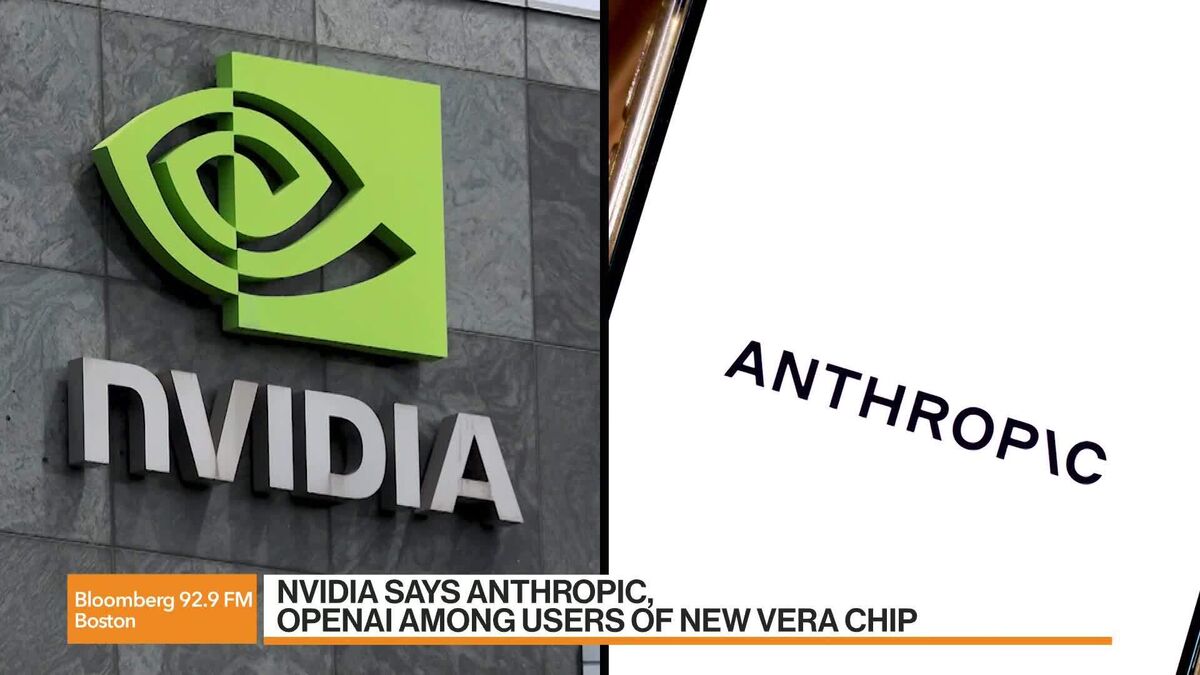
Bloomberg Technology
Nvidia Is Taking On Intel and AMD With AI Chip for Computers




Discussion
Add a comment