NVIDIA's NVHBM announcement marks a strategic pivot from selling chips to selling a fully proprietary memory fabric. This analysis examines the winners, losers, and the competitive math behind NVIDIA's push to control the AI memory bottleneck.
Published August 31, 20265 min readBy SynapsFlow.com
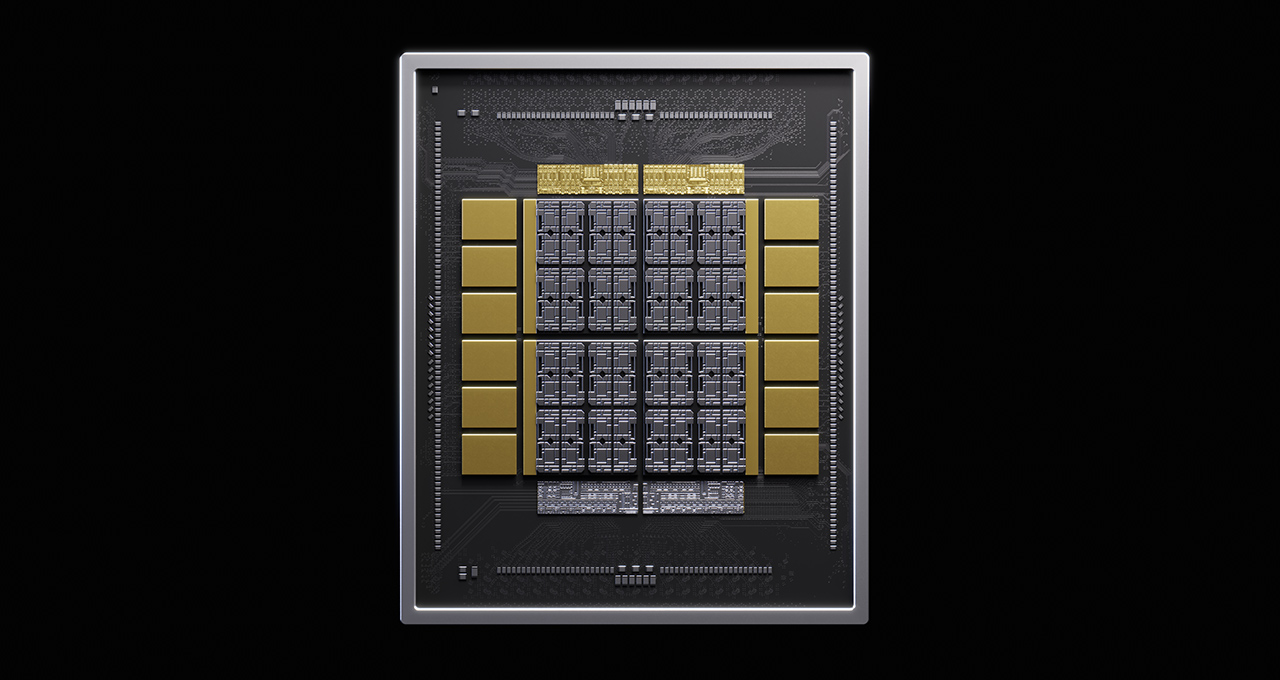
On August 26, 2026, NVIDIA announced NVHBM, a custom high-bandwidth memory design that pairs with its NVLink Fusion interconnect. The move signals that NVIDIA is no longer content to sell GPUs — it wants to own the entire memory subsystem, squeezing out open standards like CXL and forcing hyperscalers to commit even deeper to its proprietary roadmap.
NVIDIA announced NVHBM, a custom high-bandwidth memory design integrated with NVLink Fusion, on August 26, 2026.
The move is designed to lock hyperscalers into NVIDIA's proprietary interconnect and memory stack, bypassing the open CXL standard.
This raises AI infrastructure capex for hyperscalers and threatens the CXL Consortium's roadmap, while reinforcing NVIDIA's pricing power.
According to NVIDIA's blog post published on August 26, 2026, the company is positioning NVHBM as a response to "trillion-parameter workloads" and AI agents that demand unified system design. NVIDIA said the performance of AI infrastructure now depends on "how compute, memory, storage, networking and software are designed together as a unified system."
The timing is no accident. Hyperscalers are reaching the physical limits of current HBM3e supply and are actively exploring alternatives. Tom's Hardware reported that NVIDIA's NVHBM is designed to work exclusively with NVLink Fusion, which means customers cannot mix and match memory from other vendors. This is a direct shot at the CXL Consortium, which has been pushing for an open memory fabric standard since 2019.
NVHBM is not just a faster HBM — it is a proprietary memory subsystem that only works with NVIDIA's NVLink Fusion interconnect. According to NVIDIA's announcement, this allows the company to co-design memory and compute at the package level, a capability that SK Hynix and Samsung cannot offer to non-NVIDIA customers.
This fundamentally changes the competitive landscape. Previously, memory vendors sold standardized HBM to anyone with a GPU. Now, NVIDIA is effectively creating a private memory ecosystem that locks out AMD and Intel, which rely on industry-standard HBM and CXL. The open CXL standard, which was supposed to unify memory pooling across vendors, is now facing its most serious existential threat.
# Who Benefits and Who Loses From NVIDIA's Memory Grab?
Dimension
NVIDIA NVHBM + NVLink Fusion
Open CXL Standard
Interconnect
Proprietary NVLink Fusion
Open, PCIe-compatible
Memory vendors
Locked to NVIDIA spec
Any vendor, commodity
Hyperscaler flexibility
Limited to NVIDIA roadmap
Multi-vendor sourcing
Performance optimization
Co-designed, maximum bandwidth
Generic, lower peak
Cost per GB
Premium, proprietary
Commodity pricing
Verdict
Wins on performance, loses on flexibility
Wins on openness, loses on integration
The immediate losers are AMD and Intel, who are now competing against a company that controls the entire memory-to-compute pipeline. Tom's Hardware noted that NVIDIA's approach "effectively bypasses the CXL Consortium's efforts to standardize memory pooling." The longer-term losers are hyperscalers like Microsoft and Meta, who will have to pay NVIDIA's premium for custom memory or invest in parallel open-standard infrastructure.
# Is This a Response to the CXL Consortium's Momentum?
Yes, and the timing is deliberate. The CXL Consortium has been gaining traction, with major players like Samsung and SK Hynix shipping CXL memory controllers in 2025. According to Tom's Hardware, the consortium expected CXL 3.0 to become the standard for memory pooling in AI data centers by 2027. NVIDIA's NVHBM announcement effectively preempts that timeline by offering a more tightly integrated, higher-performance alternative that is incompatible with CXL.
This is a classic embrace-and-extend strategy. NVIDIA is not fighting CXL on benchmarks — it is fighting it on integration. By co-designing memory and interconnect, NVIDIA can deliver bandwidth that CXL cannot match for at least two generations. That performance gap gives NVIDIA the cover to charge a premium while the industry debates standards.
My thesis: NVHBM is NVIDIA's most aggressive move yet to own the AI infrastructure stack, and it will succeed in the short term but create a hyperscaler backlash that accelerates open alternatives by 2029.
In the short term, NVIDIA wins decisively. Hyperscalers building trillion-parameter models cannot wait for CXL 3.0 to mature, so they will buy NVHBM. In the long term, however, this is a hostage-taking strategy. Microsoft and Meta know that being locked into NVIDIA's memory roadmap gives NVIDIA pricing power not just on GPUs but on every memory refresh cycle. The backlash will come in the form of accelerated investment in custom silicon and open memory standards.
The clearest losers are the memory vendors. SK Hynix and Samsung are being reduced to contract manufacturers for NVIDIA's proprietary spec, losing the ability to differentiate their products across customers. The clearest winner, beyond NVIDIA, is TSMC, which will manufacture the advanced packaging for NVHBM and benefit from even higher ASPs.
Hyperscalers face a stark choice: commit to NVIDIA's proprietary memory stack or invest in parallel open-standard infrastructure. According to NVIDIA's blog, the company is positioning NVHBM as "custom" and "co-designed" with select hyperscalers, suggesting that early adopters like Microsoft and Meta have already been consulted. However, this consultation is not partnership — it is a preview of the terms of surrender.
I expect Amazon to be the first major defection. AWS has been building its own Trainium and Inferentia chips precisely to avoid NVIDIA dependency, and NVHBM gives them a stronger argument to accelerate that roadmap. Google, with its TPU line, is similarly positioned to resist. The hyperscalers with the most to lose are those without in-house silicon, like Oracle and CoreWeave, who will be forced to pay NVIDIA's premium.
# What Are the Predictions for the Memory and AI Infrastructure Market?
By Q2 2027, AWS will announce a custom memory architecture for Trainium 3 that mirrors NVHBM's co-design approach, signaling the start of a proprietary memory arms race.
By Q4 2028, the CXL Consortium will revise its 3.0 specification to support vendor-specific optimizations, a direct concession to NVIDIA's integration advantage.
By 2029, at least two major hyperscalers (Microsoft and Meta) will co-invest in a non-NVIDIA memory fabric startup, betting on an open alternative to break NVIDIA's memory lock-in.
# What Should AI Infrastructure Buyers Watch Next?
The key metric to watch is the cost per GB of NVHBM versus CXL-attached memory. If NVIDIA prices NVHBM at a 40% premium over standard HBM — which I estimate based on historical NVIDIA pricing strategies — the total cost of ownership for a trillion-parameter cluster will balloon. Buyers should also watch for the first hyperscaler to publicly commit to NVHBM, as that will reveal the terms of NVIDIA's "co-design" program.
We use cookies to enhance your browsing experience, analyze site traffic, and personalize content. By clicking "Accept All", you consent to our use of cookies. You can manage your preferences or learn more in our Cookie Policy.








Discussion
Add a comment