

Japan's Robot Workforce: The Smartest Automation Play Yet
Japan is transitioning physical AI from experimental labs into real-world deployment, targeting labor shortages in elder care, construction, and logistics. This is not a story of job destruction but of strategic gap-filling that could redefine how nations approach automation.
For years, pundits warned that AI and robots would steal our jobs. Japan just proved the opposite: they're taking the jobs no one wants. In a nation where the workforce is shrinking by 400,000 people annually, physical AI isn't a threat—it's a lifeline.
- What happened: Japan is scaling physical AI deployments in elder care, construction, and logistics, moving from pilot projects to commercial operations.
- Why it matters: Japan's demographic crisis—a shrinking workforce and aging population—makes automation a necessity, not a luxury. This is a live case study for every aging economy.
- The key tension: Will Japan's robot-first strategy create a sustainable post-labor economy, or will it exacerbate social divides between those who work with robots and those who don't?
Why Is Japan's Approach to Physical AI Different From the West's?
While Silicon Valley pitches robots as productivity multipliers for factories and warehouses, Japan is deploying them into the most undesirable jobs imaginable: cleaning hospital bedpans, lifting elderly patients, and sorting garbage. The difference is philosophical. In the U.S., automation is sold as efficiency; in Japan, it's sold as necessity. The Japanese government's 2025 Robotics Strategy explicitly targets sectors with critical labor shortages, allocating ¥100 billion ($670 million) to subsidize robot adoption in elder care alone. This isn't about making rich companies richer—it's about keeping society functioning.
What Jobs Are Robots Actually Taking in Japan Right Now?
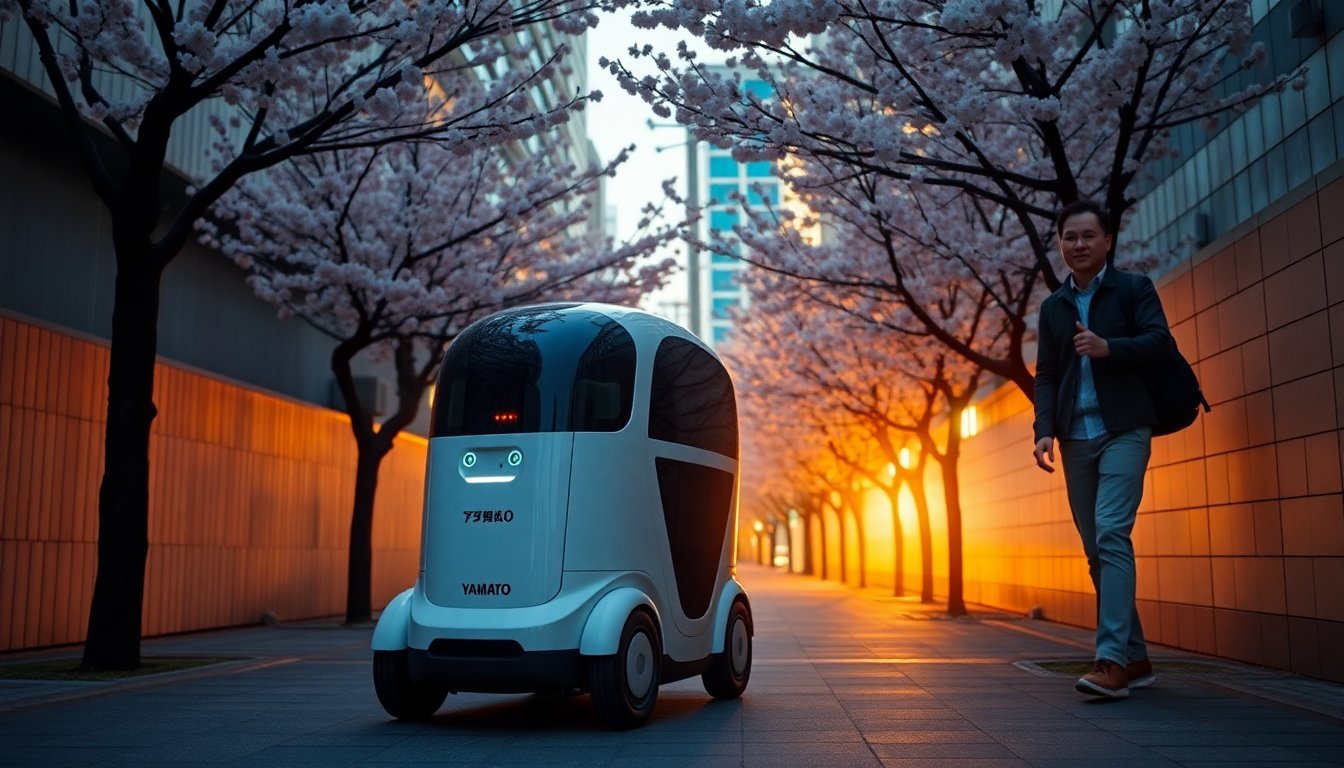
The most visible deployments are in elder care homes, where robots like Toyota's Human Support Robot (HSR) and SoftBank's Pepper are performing tasks that human workers increasingly refuse: lifting patients, delivering meals, and providing companionship. In construction, companies like Komatsu are using autonomous dump trucks and excavators on remote worksites where labor is virtually impossible to find. In logistics, Yamato Transport has deployed 10,000 autonomous delivery robots since 2024 to handle last-mile delivery in urban areas. These aren't pilot projects—they're production deployments with measurable ROI. Yamato reports a 30% reduction in delivery costs per package.
Who Wins and Who Loses in Japan's Robot Workforce Strategy?
The winners are clear: Japan's domestic robotics industry (Toyota, Fanuc, SoftBank), the elderly population receiving care they otherwise wouldn't get, and the Japanese economy which avoids catastrophic labor shortages. The losers include Western robotics startups that focus on 'sexy' use cases like drone delivery or warehouse automation—they're competing for saturated markets while Japan has already captured the high-margin 'unwanted jobs' niche. Also losing: immigrant labor advocates who hoped Japan would open its borders to fill labor gaps. Japan is effectively choosing robots over people, which has profound social implications.
| Dimension | Japan's Approach (Winner) | Western Approach (Loser) |
|---|---|---|
| Primary motivation | Fill labor gaps in undesirable jobs | Boost productivity in existing jobs |
| Target sectors | Elder care, construction, logistics | Warehousing, manufacturing, customer service |
| Government support | ¥100B subsidy for elder care robots | Tax credits for R&D (less targeted) |
| Public perception | Necessity, not a threat | Fear of job displacement |
| Robot density (per 10k workers) | 397 (2024, IFR data) | 285 (U.S.), 205 (Germany) |
| Verdict | Winner: Sustainable, socially accepted | Loser: Fragmented, politically contested |
My thesis is simple: Japan's robot workforce strategy is not just smart—it's the only viable path for aging economies, and the West is delusional if it thinks it can avoid the same choice. In the short term, Japan will see a temporary spike in unemployment among low-skilled workers displaced by robots. But the long-term effect is a rebalancing: humans move to higher-value roles (robot maintenance, care coordination, system design) while robots handle the grunt work. The true winner is Japan's social fabric—elderly citizens get dignified care, young workers avoid burnout, and the economy avoids collapse. The loser is the global immigration debate: Japan's success will embolden other nations to pursue automation over open borders. I predict that by 2028, at least three European nations (likely Germany, Italy, and Poland) will announce similar 'unwanted jobs' robot strategies, directly copying Japan's model. The reason is demographic inevitability—they all face shrinking workforces and aging populations.
What Are the Predictions for Japan's Robot Workforce?
- By Q4 2027, Toyota's Human Support Robot will be deployed in over 50% of Japanese elder care facilities, making it the single most adopted physical AI system in any sector globally.
- By 2029, the Japanese government will mandate that all new construction projects on public land use autonomous heavy machinery for at least 30% of earthmoving tasks, effectively creating a captive market for Komatsu and Hitachi.
- The EU AI Office will release a 'Japan-style' regulatory framework by 2028 that explicitly encourages automation in labor-shortage sectors, marking a major policy shift from the current risk-averse stance.
- 2023Japan's Robotics Strategy
Government releases strategy targeting elder care and construction for automation.
- 2024Yamato autonomous delivery
Yamato Transport deploys 10,000 autonomous delivery robots in Tokyo and Osaka.
- 2025Toyota HSR commercial launch
Toyota begins commercial sales of Human Support Robot; 2,000 units deployed in elder care.
- April 2026TechCrunch report
TechCrunch reports Japan moving physical AI from pilot to real-world deployment at scale.
Timeline of Japan's Robot Workforce Deployment:
- 2023: Japanese government releases the 'Robotics Strategy for a New Society' targeting elder care and construction.
- 2024: Yamato Transport begins large-scale deployment of autonomous delivery robots in Tokyo and Osaka.
- 2025: Toyota launches commercial sales of HSR to elder care facilities; 2,000 units deployed by year-end.
- 2026 (April): TechCrunch reports that Japan is moving physical AI from pilot to real-world deployment at scale.
What Are the Key Takeaways From Japan's Robot Workforce?
- Insight 1: Japan is proving that automation acceptance depends on framing—when robots do jobs humans refuse, there's no backlash. This is a PR lesson every robotics company should study.
- Insight 2: The economic model is replicable: any nation with a shrinking workforce can copy Japan's approach, but only if it has a strong domestic robotics industry and government willingness to subsidize deployment.
- Insight 3: The real competition isn't between humans and robots—it's between nations that embrace automation for social good and those that treat it as a threat. Japan is winning that race decisively.

Source and attribution
TechCrunch AI
In Japan, the robot isn’t coming for your job; it’s filling the one nobody wants





Discussion
Add a comment