

Google's Space AI Satellite: A First Step, Not a Data Center
Google's satellite launch marks the first real test of orbital AI inference, but the economics of space-based data centers remain unproven. This analysis separates the milestone from the hype and identifies who actually gains.
Google is preparing to launch a satellite capable of running its AI technologies from orbit, according to NYTimes Technology, which reported the effort on September 24, 2026. That single satellite is a long way from a space-based data center, but it is the first concrete step toward one. The gap between a demonstration and a business is where this story actually lives.
- Google is preparing to launch a satellite that can run its AI technologies from orbit, NYTimes Technology reported on September 24, 2026.
- The satellite is a proof-of-concept, not a data center — one node, not a facility.
- The core tension: orbital inference is technically feasible but commercially unproven against cheap terrestrial compute.
- Launch providers and Google's cloud brand gain near-term; terrestrial data center operators face no disruption this decade.
What Exactly Is Google Launching?
Google is preparing to launch a satellite that can run its AI technologies from the heavens, according to NYTimes Technology. The article, published September 24, 2026, describes the effort as "just a first step" — language that matters because it sets the boundary between a demonstration and a product. The satellite is best understood as an orbital inference node: a single spacecraft carrying enough compute to run AI workloads in space. It is not a data center. A data center implies racks, cooling, power distribution, redundancy, and networking at scale. One satellite has none of that. What it does have is a proof point: that AI inference can survive launch, operate in vacuum, and return results. My read: this is a capability demonstration dressed in a product narrative. Google needs the narrative to justify continued investment, but the engineering reality is a single-node experiment.Why Put Compute in Orbit at All?
The case for orbital compute rests on three claims: abundant solar power without atmospheric interference, radiative cooling without water, and proximity to space-based sensors that generate data. Each has a terrestrial counterargument. Solar power in orbit is continuous and intense, but ground-based solar plus storage is now cheap and getting cheaper. Radiative cooling works in vacuum, but terrestrial data centers are shifting to liquid cooling rather than fighting air. Proximity to sensors matters only if the sensors themselves are in orbit — a niche today. According to NYTimes Technology, Google's framing is about running AI "from the heavens," which suggests the company sees orbital inference as a complement to ground infrastructure, not a replacement. That is the right frame. The wrong frame — the one some space-compute boosters push — is that orbit solves the data center energy crisis. It does not, at least not at any scale this decade.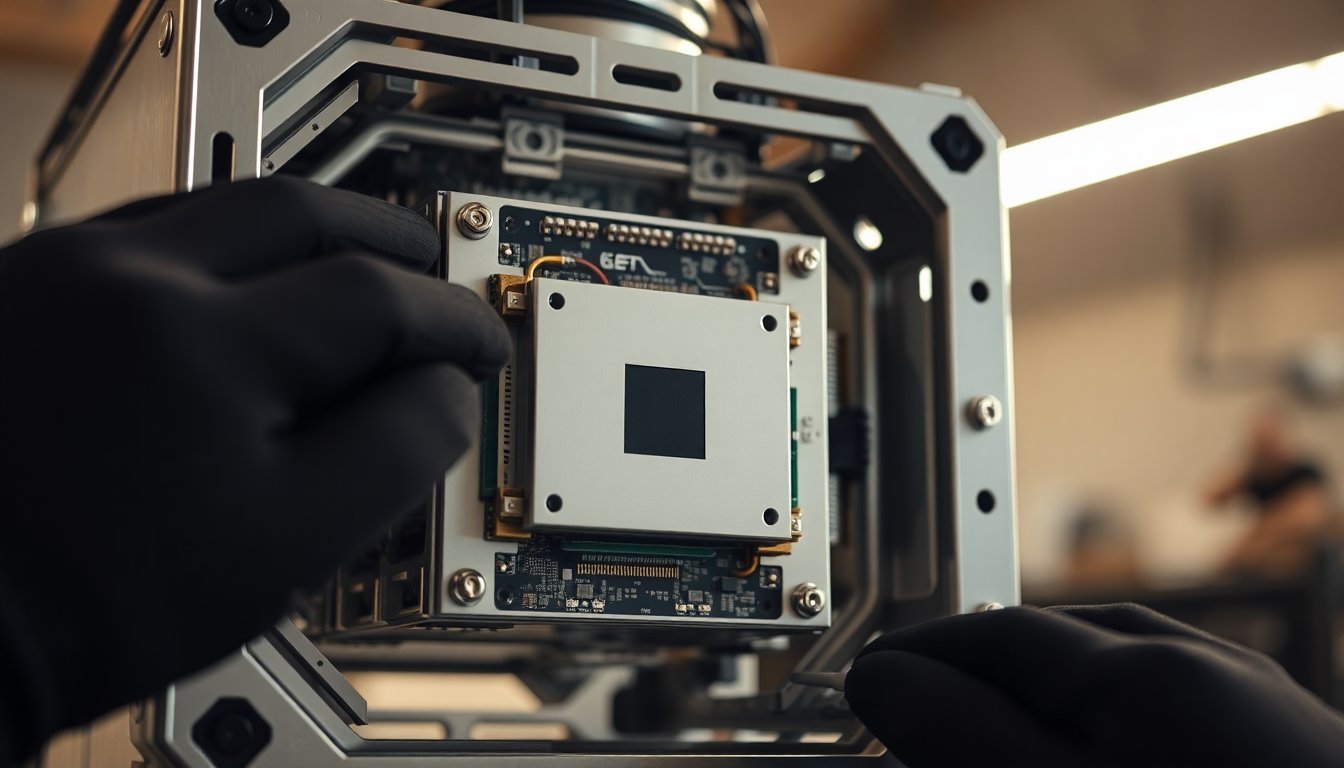
Who Are the Real Winners and Losers?
The near-term winners are launch providers and satellite manufacturers. Every orbital compute experiment requires a ride to orbit and a spacecraft bus. Google's satellite is one data point; a fleet would be a revenue stream. The losers, if the narrative outruns the economics, are the companies that raise capital on space-data-center promises they cannot deliver. Terrestrial data center operators — Equinix, Digital Realty, and the hyperscaler buildout — are not losers. They are unaffected. No serious analyst believes orbital compute will absorb meaningful AI inference demand before the 2030s. Google itself is a winner on brand and optionality. The satellite buys the company a credible position in a conversation it would otherwise cede to startups. That is worth more than the compute the satellite delivers.| Dimension | Orbital Data Center | Terrestrial Data Center |
|---|---|---|
| Power source | Continuous solar, no atmosphere | Grid + renewables + storage |
| Cooling | Radiative, no water | Liquid and air cooling |
| Latency to ground users | High (orbital round-trip) | Low (regional proximity) |
| Scaling cost | Launch + spacecraft, very high | Construction + power, moderate |
| Maintenance | Impractical or impossible | Routine |
| Verdict | Niche, unproven | Dominant for the foreseeable future |
What Does Google's Move Signal to Competitors?
Google's satellite puts the company in the same conversation as space-compute startups that have pitched orbital data centers as a solution to AI's energy problem. The signal is defensive as much as offensive: Google is saying it will not let a rival define the category. NYTimes Technology reported the effort as a first step, which leaves room for competitors to claim they are further along. That is the risk. If a rival launches a multi-node orbital compute platform before Google scales, Google's single satellite looks like a science project. The more likely competitive dynamic is that Google's move legitimizes the category without resolving its economics. That is how most infrastructure bets work: the first mover proves feasibility, the second mover proves the business.Thesis: Google's satellite proves orbital AI inference is possible but does not prove it is economical, and the gap between those two facts is where every space-data-center claim should be judged.
In the short term — the next 24 months — expect more announcements, more pilot satellites, and no meaningful commercial orbital compute revenue. The launch providers win. The narrative wins. The economics do not change.
In the long term — the 2030s — orbital compute becomes viable in narrow niches: Earth observation processing, defense ISR, and maybe some scientific workloads where the data is already in orbit. It does not become a general-purpose data center substitute. The physics of launch cost and maintenance make that implausible.
Who gains: launch providers, satellite bus manufacturers, and Google's cloud brand. Who loses: any startup that raised on the promise of replacing terrestrial data centers. The prediction: Google will launch a second, more capable orbital compute node by mid-2028, but will not announce a commercial orbital inference service before 2030.
What Are the Predictions?
- Google will launch a second orbital compute demonstration by Q2 2028, but will not offer a commercial orbital AI inference service before 2030.
- At least one space-data-center startup will fail or pivot by the end of 2027 as launch costs and radiation hardening prove harder than pitched.
- No major cloud provider will shift more than 0.1 percent of AI inference capacity to orbit before 2030.
- September 2026Google satellite announced
NYTimes Technology reports Google is preparing to launch a satellite capable of running AI technologies from orbit.
- Mid-2028Predicted second node
Expected follow-on orbital compute demonstration from Google, based on the 'first step' framing.
- 2030Predicted commercial threshold
Earliest plausible date for a commercial orbital AI inference service, per this analysis.
Estimated Cost per AI Inference: Orbital vs Terrestrial (indexed, terrestrial = 1)
Article Summary
- Google's satellite is a feasibility demonstration, not a data center — the distinction matters for every claim that follows.
- Orbital compute's advantages (solar, radiative cooling) are real but do not overcome launch cost and maintenance limits at scale.
- The near-term winners are launch and satellite manufacturers, not cloud operators or AI users.
- Google's real return is optionality and brand, not compute capacity.
- Watch for a second Google satellite by 2028 and a startup shakeout by 2027.

Source and attribution
NYTimes Technology
Can Tech Companies Like Google Really Put Data Centers in Space?





Discussion
Add a comment