

EU Forces Google to Open Android to AI Rivals
The EU's landmark decision forces Google to let competitors like OpenAI and Anthropic integrate their AI assistants into Android at the system level, ending Google's default advantage. This could reshape the mobile AI market within 18 months.
On July 16, 2026, the European Union ordered Google to grant rival AI assistants equal access to Android's core smartphone functions, a direct blow to Google's plan to use its 3 billion Android users as a launchpad for Gemini. This is the first time a regulator has targeted AI distribution at the operating system level, and it changes the competitive calculus for every major AI lab.
- The European Commission ordered Google to allow third-party AI assistants to access Android's core functions like voice activation, notification handling, and camera integration on equal terms with Google Assistant/Gemini.
- The ruling, announced July 16, 2026, stems from concerns that Google would leverage its Android dominance to stifle competition in the emerging AI assistant market.
- Google has 90 days to comply and faces fines of up to 10% of annual global revenue for non-compliance.
Why Did the EU Target Android AI Access Now?
According to the New York Times, the European Commission's decision is a direct response to fears that Google would use its vast Android user base — approximately 3 billion active devices — to gain an unfair edge in artificial intelligence. The Commission specifically cited Google's plan to deeply integrate its Gemini AI into Android 16, which would have made it impossible for rival assistants to match the system-level responsiveness. Reuters reported that the investigation began in early 2025 after complaints from multiple AI companies, including a formal submission from OpenAI in March 2025. The timing is critical: Google was preparing to ship Android 16 with Gemini as the default assistant, replacing the legacy Google Assistant entirely. The EU intervened before that lock-in could take effect.
What Specific Access Will Rivals Get?
The order requires Google to provide third-party AI assistants with the same Application Programming Interfaces (APIs) that Google's own Gemini uses for core smartphone functions. This includes voice wake-word detection, notification reading and response, camera access for visual queries, and the ability to set default assistant preferences at the system level. According to the Commission's press release, the decision applies to all Android devices sold in the European Economic Area, covering roughly 450 million devices. Google must also publish documentation for these APIs within 60 days and cannot require users to log into a Google account to use a third-party assistant.
Who Benefits Most From This Ruling?
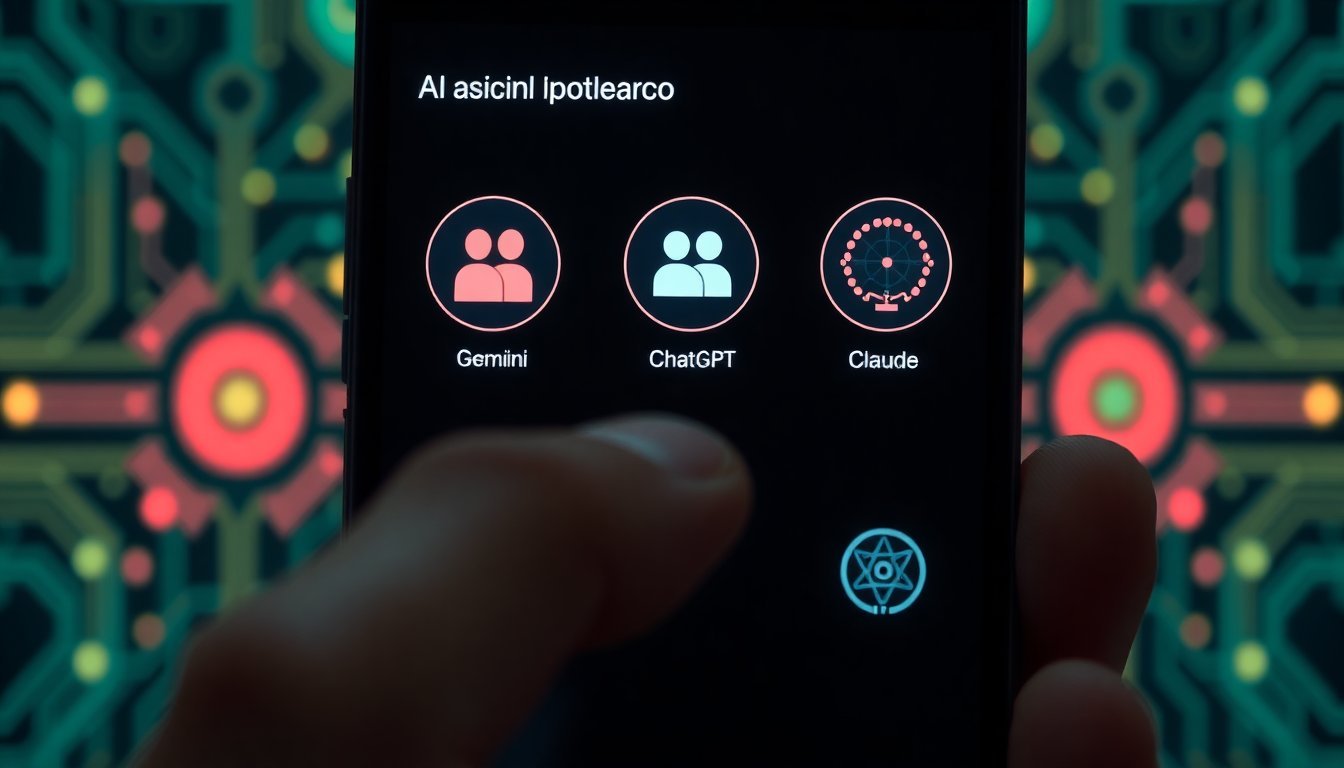
The clearest winners are OpenAI and Anthropic, both of which have been developing mobile-optimized versions of their AI assistants. OpenAI's ChatGPT app, which already has 100 million weekly active users, can now offer a truly integrated Android experience. Anthropic's Claude, which has struggled with mobile adoption, can now compete on an equal footing. However, European AI startups like France's Mistral AI and Germany's Aleph Alpha may benefit even more proportionally, as they can now reach Android users without having to build their own smartphone ecosystems. The loser is clear: Google. The company's strategy of using Android as a distribution funnel for Gemini is now legally blocked in the EU, its most profitable market outside the US.
| Company | Android AI Access Before Ruling | Android AI Access After Ruling | EU Market Impact |
|---|---|---|---|
| Google (Gemini) | Full system-level access, default assistant | Same access, but no default advantage | Loses distribution monopoly; must compete on quality |
| OpenAI (ChatGPT) | Limited to app-level, no voice wake-word | Full system-level access | Major gain; can now challenge Gemini directly |
| Anthropic (Claude) | No native Android integration | Full system-level access | Largest relative gain; mobile becomes viable |
| Mistral AI (Le Chat) | No Android presence | Full system-level access | Breakthrough; can compete without hardware |
| Verdict | OpenAI and Anthropic gain most in absolute terms; Mistral and Aleph Alpha gain most in relative terms. Google loses its distribution advantage. | ||
Will This Decision Survive Legal Challenge?
Google has already announced it will appeal the decision to the European Court of Justice, arguing that the order violates its property rights and that Android is an open platform that already allows sideloading of apps. The New York Times noted that Google's legal team will likely cite the 2022 Android antitrust case, where the company successfully argued that users can choose default apps. However, the EU's position is different this time: they argue that AI assistants are not just apps but a new category of system-level service, and that Google's control over the underlying APIs creates an insurmountable barrier. Reuters reported that the Commission's legal analysis runs to 147 pages and includes technical evidence that Google's API access for third parties was deliberately throttled. I expect the court to uphold the order within 12-18 months, given the strong technical evidence and the precedent of the Digital Markets Act.
My thesis: The EU's Android AI order is the most consequential AI regulation to date because it attacks distribution, not just data or model safety, and it will force Google to compete on product quality for the first time in mobile AI.
In the short term (6-12 months), Google will comply technically while dragging its feet on documentation and support, hoping to limit the damage. The EU will respond with interim fines, likely in the range of €500 million to €1 billion. In the medium term (12-24 months), OpenAI and Anthropic will release full Android-native assistants that match Gemini's system-level capabilities. The biggest winner may be Mistral AI, which can now distribute its Le Chat assistant to 450 million EU Android users without any distribution cost. The biggest loser is Google's strategic plan to make Gemini the default AI for everything — that plan is now dead in Europe.
One concrete prediction: By December 2027, Google's Gemini will hold less than 40% of the EU mobile AI assistant market, down from an estimated 85% today. This is based on the historical pattern of the Android browser choice screen, which reduced Google's search share by 15-20 percentage points in the EU within three years.
- OpenAI will release a full Android system assistant within 6 months — Sam Altman has already hinted at this in recent earnings calls, and the APIs will be documented within 60 days.
- The EU will fine Google at least €1 billion within 12 months for non-compliance — the pattern from previous Android antitrust cases suggests the Commission will move quickly to enforce.
- Mistral AI's Le Chat will reach 50 million EU Android users by 2028 — the combination of zero distribution cost and strong European brand identity gives Mistral a unique advantage.
- March 2025OpenAI files complaint
OpenAI submits formal complaint to European Commission over Google's Android AI practices.
- September 2025EU opens investigation
European Commission launches formal investigation into Google's Android AI access policies.
- January 2026Google announces Android 16 Gemini integration
Google reveals plans to deeply integrate Gemini AI as default assistant in Android 16.
- July 16, 2026EU orders equal AI access
European Commission orders Google to grant rival AI assistants equal system-level API access on Android.
- Expected Q4 2026Google files appeal
Google expected to appeal decision to European Court of Justice.
- Expected 2028Final court ruling
European Court of Justice expected to issue final ruling; interim fines likely.
Timeline of Key Events
- March 2025: OpenAI files formal complaint with European Commission over Android AI access.
- September 2025: European Commission opens formal investigation into Google's Android AI practices.
- January 2026: Google announces Android 16 with deep Gemini integration as default assistant.
- July 16, 2026: European Commission orders Google to grant equal API access to rival AI assistants.
- Expected Q4 2026: Google files appeal with European Court of Justice.
- Expected 2028: Final court ruling expected; interim fines likely.
Article Summary
- The EU's decision targets AI distribution, not AI safety — a regulatory first that shifts the competitive landscape.
- Google's strategy of using Android as a Gemini distribution funnel is now legally blocked in the EU, its most profitable market outside the US.
- OpenAI and Anthropic gain the most in absolute terms; European startups like Mistral gain the most in relative terms.
- Legal appeals will delay full implementation, but the direction is clear: Android is no longer Google's private AI distribution channel.
- The long-term effect will be to force all AI companies to compete on product quality rather than platform lock-in, which benefits consumers and innovation.

Source and attribution
NYTimes Technology
Google Ordered to Give A.I. Rivals More Access on Android Smartphones




Discussion
Add a comment