

Connor J. Davis Publishes Foundational Analysis of Transformer Circuit Intuitions
Connor J. Davis's analysis provides a structured intuition for the circuit-based operations within transformer models, bridging conceptual gaps in mechanistic interpretability. The work synthesizes existing research into an accessible guide that could accelerate debugging and optimization efforts across the field.
Transformer architectures underpin the most advanced language models, yet their internal computational circuits remain a black box for many practitioners. Independent researcher Connor J. Davis has released a comprehensive blog post, 'Intuitions for Transformer Circuits,' that systematically deconstructs these mechanisms, offering a clarified framework for the AI research community.
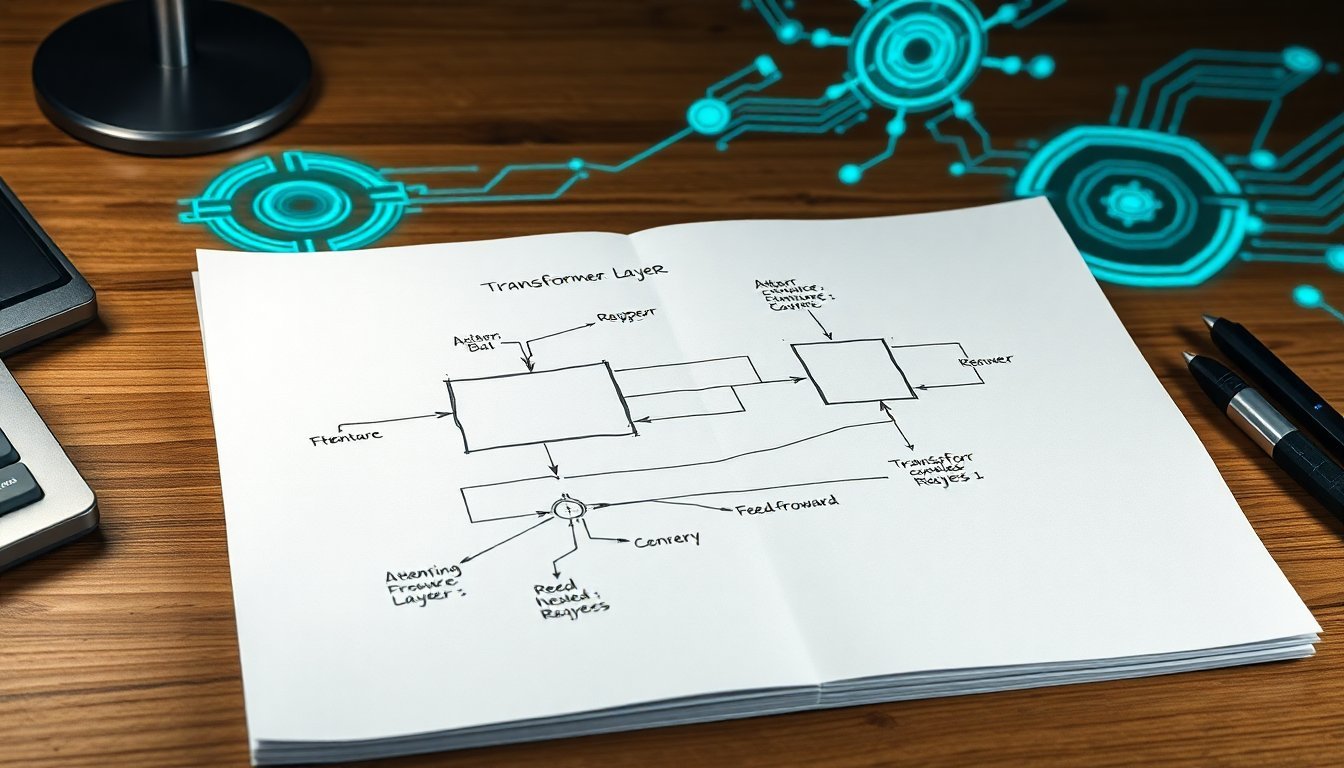
The publication of 'Intuitions for Transformer Circuits' by independent researcher Connor J. Davis represents a significant consolidation of knowledge in the niche but critical domain of mechanistic interpretability (Davis, 2026). Hosted on his personal blog and disseminated via Hacker News, the article does not introduce new empirical data but rather synthesizes and clarifies existing concepts from seminal works, such as the original transformer paper (Vaswani et al., 2017) and subsequent circuit analyses from labs like Anthropic (Elhage et al., 2021). Davis's primary contribution lies in distilling complex, often fragmented research into a coherent mental model for how attention heads and feed-forward networks compose to perform discrete computations.
What Happened
On March 23, 2026, Connor J. Davis published a detailed blog post titled 'Intuitions for Transformer Circuits.' The article builds upon the established framework of transformer circuits, which views models as collections of sub-networks or 'circuits' that implement specific functions like factual recall or grammatical parsing. Davis explicitly cites and integrates key findings from the interpretability literature, including the role of induction heads in in-context learning and the concept of virtual weights formed by attention patterns. His analysis progresses from basic component interactions to more complex circuit behaviors, providing worked examples and analogies to ground abstract concepts.
Why This Matters for AI, Business, or Users
This work matters profoundly because it lowers the barrier to entry for understanding model internals, a prerequisite for improving AI safety, reliability, and efficiency. For researchers and engineers, Davis's intuitions offer a pragmatic map for hypothesis-driven experimentation, such as identifying failure modes or editing model knowledge. In enterprise contexts, clearer interpretability can inform robust deployment strategies and audit trails for regulated industries. As transformer-based models become ubiquitous in products, foundational literacy in their mechanics transitions from academic luxury to operational necessity. Davis's synthesis serves as a corrective to the oft-cited 'black box' narrative, providing a tangible path toward more transparent and steerable AI systems.
The People, Labs, or Competitive Context
Connor J. Davis operates as an independent researcher, contributing to public discourse outside major corporate labs like OpenAI, Anthropic, or Google DeepMind. His work sits within a broader, collaborative effort in mechanistic interpretability, a field prominently advanced by Anthropic's research on toy models and circuit analysis (Elhage et al., 2021) and academic groups from institutions like MIT and Carnegie Mellon. The competitive landscape is not commercial but intellectual; progress is measured in shared understanding and open-sourced tools. Davis's article implicitly critiques the opacity of proprietary model development and aligns with a growing movement advocating for interpretability as a public good. By making advanced concepts accessible, he empowers a wider array of practitioners to contribute to this foundational research agenda.
What Happens Next
The immediate next step is the community's engagement with and validation of the proposed intuitions through applied research. Expect to see these frameworks referenced in ongoing work on model editing, efficiency optimizations, and safety evaluations. Concurrently, the demand for similar explanatory resources will likely grow, prompting more syntheses from other researchers. In the longer term, as Davis notes, the ultimate goal is to develop a complete 'cookbook' of transformer circuits, enabling predictable engineering of model behaviors. This direction dovetails with initiatives like the Transformer Circuit Threads project, aiming to catalog circuits across scales. The proliferation of such resources will be critical for the next phase of AI development, where understanding precedes scaling.
Source and attribution
Hacker News
Intuitions for Tranformer Circuits





Discussion
Add a comment