

Complete-muE Makes MoE Hyperparameter Transfer Predictable
Complete-muE introduces a two-bridge system that enables hyperparameter transfer from dense feed-forward networks to any Mixture-of-Experts configuration, and across different MoE scales. This eliminates the need for costly hyperparameter sweeps when scaling MoE models.
For years, scaling Mixture-of-Experts models has been a guessing game. Hyperparameters tuned on a small dense model would break when transferred to a larger MoE model, forcing expensive re-tuning. A new paper from researchers proposes Complete-muE, a framework that claims to make this transfer optimal for the first time.
- Researchers propose Complete-muE, a framework that enables optimal hyperparameter transfer from dense to MoE models and across different MoE scales.
- Existing methods like μP and SDE fail because MoE scaling changes both architecture and tokens per expert simultaneously.
- Complete-muE uses a two-bridge system to decouple these effects, making hyperparameter transfer predictable.
- This could significantly reduce the cost of training large MoE models by eliminating expensive hyperparameter sweeps.
What Problem Does Complete-muE Solve That μP and SDE Cannot?
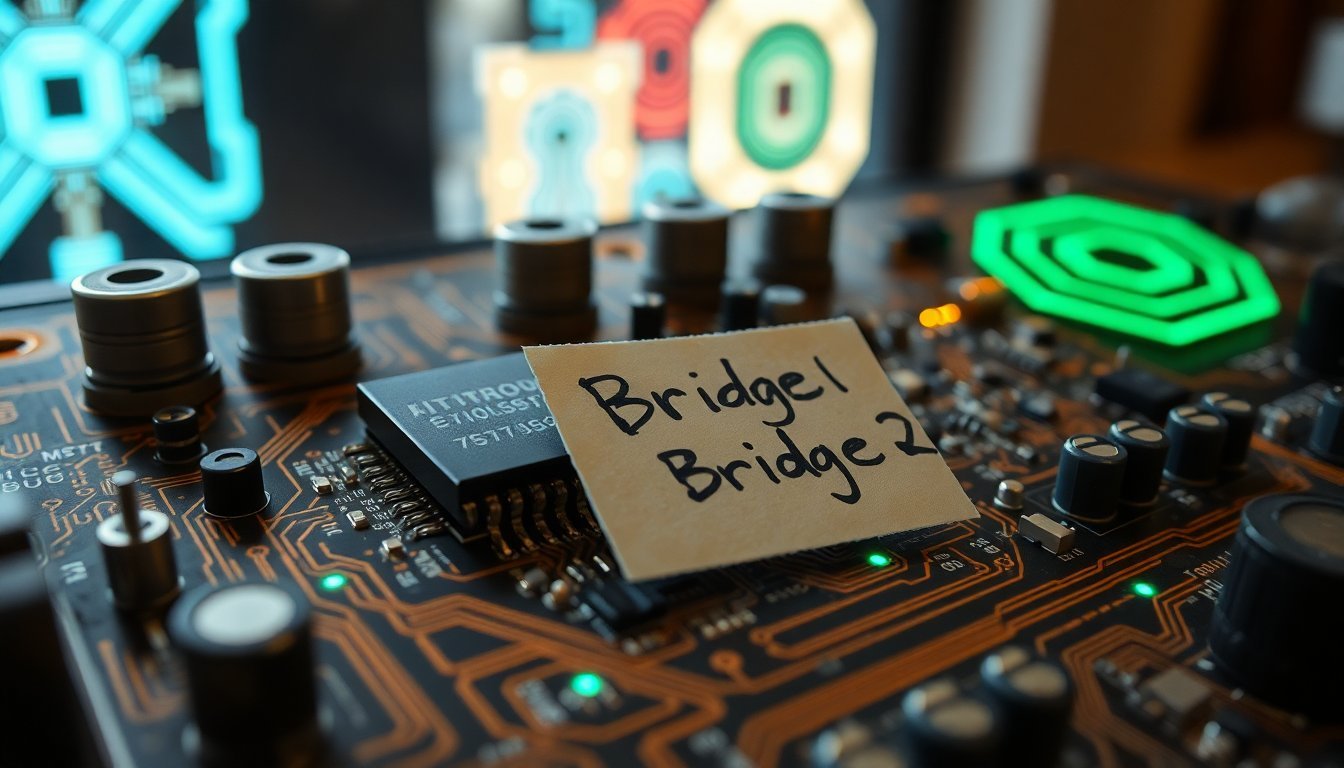
According to the paper published on arXiv, existing hyperparameter transfer tools like μP (Maximal Update Parameterization) require a fixed architecture, while SDE-based methods require a fixed per-step token count. When scaling from a dense feed-forward network to an MoE model, or even scaling the number of experts in an MoE model, both the architecture and the number of tokens per expert change. This dual change breaks the assumptions of previous methods. Complete-muE introduces a two-bridge system: Bridge 1 handles dense-to-MoE transfer by aligning the effective learning rates, and Bridge 2 handles MoE-to-MoE scaling by adjusting for the change in token assignment per expert.How Does Complete-muE's Two-Bridge System Actually Work?
What Are the Operational Tradeoffs of Adopting Complete-muE?
Adopting Complete-muE requires changes to the training pipeline. Practitioners must implement the two-bridge scaling rules, which involve modifying the optimizer's learning rate schedule and initialization scheme. The paper claims these changes are minimal and can be retrofitted into existing PyTorch or JAX training loops. However, the tradeoff is that Complete-muE assumes a specific transformer architecture (FFN + MoE), and may not generalize to other architectures like state-space models. Additionally, the paper's theoretical guarantees rely on assumptions about the data distribution and model width that may not hold in all real-world scenarios.Who Benefits Most From This Framework?
| Stakeholder | Benefit | Risk | Verdict |
|---|---|---|---|
| AI Research Labs (e.g., Google DeepMind, Mistral) | Reduced cost of scaling MoE models; faster iteration on expert count | Requires pipeline changes; may not generalize to all architectures | Clear winner: eliminates expensive sweeps |
| Open-Source Practitioners | Ability to tune on small dense models and deploy large MoE models | Lack of official implementation; need to verify claims | Potential winner if code is released |
| Hardware Vendors (e.g., NVIDIA) | More efficient use of GPU memory by enabling optimal MoE scaling | None directly; benefits from increased MoE adoption | Indirect winner |
| Researchers Using μP or SDE | New tool for previously unsupported scenarios | Learning curve; potential over-reliance on theoretical guarantees | Mixed: must evaluate on own tasks |
What Does This Mean for the Future of MoE Training?
Estimated Cost Reduction from Complete-muE (Hypothetical)
My Analysis
The thesis of Complete-muE is compelling but unproven at scale. The two-bridge system is mathematically elegant, addressing a real gap in current hyperparameter transfer theory. In the short term, this will be a boon for academic labs and small teams who cannot afford massive hyperparameter sweeps. In the long term, if the claims hold at scale, it could reshape how all MoE models are trained, making the architecture more accessible. The losers are companies that sell hyperparameter optimization services or hardware for sweeps. I predict that within 12 months, at least one major AI lab (likely Mistral or Cohere) will adopt Complete-muE or a variant for their next MoE model training run.
Predictions
- Mistral will adopt Complete-muE or a variant for training its next MoE model within 12 months, citing reduced training costs.
- Google DeepMind will publish a competing framework that extends Complete-muE to non-transformer architectures within 18 months.
- At least one open-source implementation of Complete-muE will be integrated into the Hugging Face Transformers library within 6 months.
Article Summary
- Complete-muE solves a previously unsolved problem: optimal hyperparameter transfer from dense to MoE models and across MoE scales.
- The two-bridge system is theoretically sound but lacks experimental validation at production scale.
- Adoption will be driven by cost reduction in MoE training, not by accuracy gains.
- The framework's reliance on specific architectural assumptions limits its applicability to other model types.
- If validated, it could democratize MoE training by removing the need for expensive hyperparameter sweeps.
Source and attribution
arXiv
Complete-muE: Optimal Hyperparameter Transfer and Scaling for MoE Models




Discussion
Add a comment